Buying guide
Seiko vs Orient vs Tissot
The two Japanese brands publish a daily accuracy figure. The Swiss one does not, and costs about three times as much. Here is exactly what that money buys - and the two cases where it is worth paying.
Buy the Orient if you want the most watch for the money, the Seiko if you want the biggest spare-parts and strap ecosystem on earth, and the Tissot only if the 80-hour power reserve or the Swiss name is worth roughly triple to you. That is the whole answer, and the published specifications support it: the Orient Mako 40 carries 200m of water resistance and a sapphire crystal, the Seiko 5 Sports SRPD63 carries 100m and Hardlex, and the Tissot PRX carries 100m and sapphire — plus 80 hours of reserve that neither Japanese watch comes close to.
The part most three-way comparisons skip: Seiko and Orient both publish a daily accuracy tolerance and Tissot publishes none at all. Seiko states -35 to +45 seconds a dayfor the 4R family in its own instruction manual; Orient's specification sheets give -15 to +25 seconds a day for the F6 family. Tissot publishes no daily rate for the Powermatic 80 anywhere we could find. So the brand charging the most is the only one of the three that will not tell you how well the watch is expected to keep time.
Disclosure
Some links here are affiliate links — mostly to Amazon. If you buy through one we may earn a small commission, at no extra cost to you. It never changes which watch we pick or the price you pay. Prices are pulled live and date-stamped; where we can't verify one, we show none. Full disclosure.
The contenders
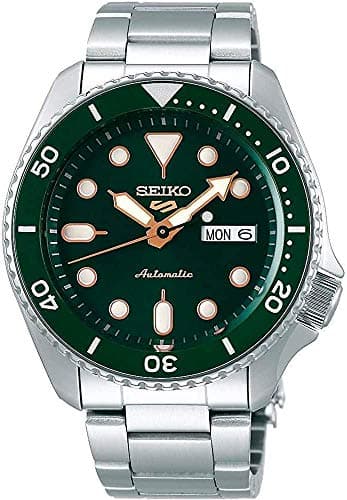
Seiko
Seiko 5 Sports SRPD63
No buyable offer at the last price check (October 17, 2026). We show nothing rather than a stale number.
#ad · we may earn a commission from this link to Seiko 5 Sports SRPD63
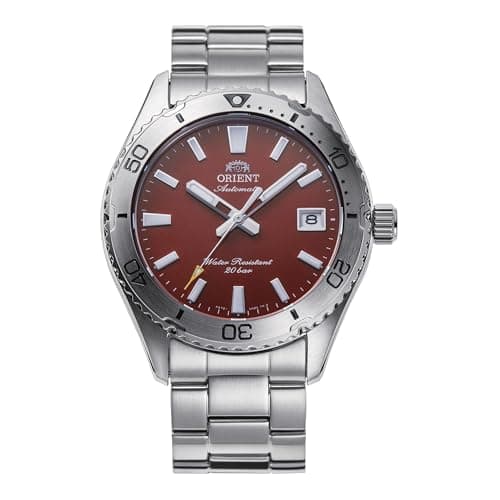
Orient
Orient Mako 40 (AC0Q Diver)
Price as of October 17, 2026. Prices change — Amazon's is the one that counts.
#ad · we may earn a commission from this link to Orient Mako 40 (AC0Q Diver)
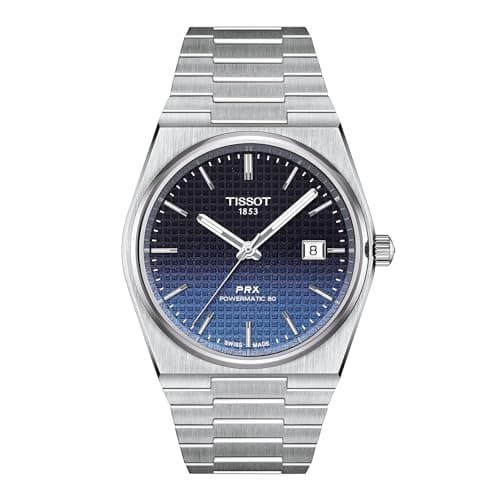
Tissot
Tissot PRX Powermatic 80
Price as of October 17, 2026. Prices change — Amazon's is the one that counts.
#ad · we may earn a commission from this link to Tissot PRX Powermatic 80
Side by side
One exemplar from each brand, side by side
Published specifications from Seiko's, Orient's and Tissot's own product pages plus the caliber references listed in Sources. Where a maker publishes nothing, this table says so rather than guessing.
| Watch | Published specs | Best for | Price |
|---|---|---|---|
| SeikoSeiko 5 Sports SRPD63 | 4R36 · 24J100m WRHardlex42.5mm · L2L 46mm22mm lugs | The one Seiko 5 to own if you own one | No live price |
| OrientOrient Mako 40 (AC0Q Diver) | F6722 · in-house200m WRSapphire39.9mmL2L 46.5mm | A 200m in-house diver on a normal wrist | $253.25 |
| TissotTissot PRX Powermatic 80 | Powermatic 8080h reserve100m WRSapphire40mm | The 'if you can stretch past $500' upgrade | $850.00 |
#ad · we may earn a commission · Specs as published by the manufacturer (see Sources). Live prices from the Amazon Product API, as of October 17, 2026 — where we have no verified live price we show none rather than a number that has rotted.
The three brands in one table
Each column is one brand's best argument in this band — Seiko's volume sports automatic, Orient's in-house diver, and Tissot's integrated-bracelet design watch.
| Spec | Seiko 5 SRPD63 | Orient Mako 40 | Tissot PRX |
|---|---|---|---|
| Caliber | Seiko 4R36, in-house | Orient F6722, in-house | Powermatic 80 (ETA C07.111) |
| Jewels | 24 | 22 | 23, by variant |
| Published daily rate | -35 / +45 sec/day | -15 / +25 sec/day | Not published |
| Power reserve | approx. 41h | approx. 40h | 80h |
| Beat rate | 21,600 vph | 21,600 vph | 21,600 vph |
| Hacks (second hand stops)? | Yes | Yes | Yes |
| Hand-winds? | Yes | Yes | Yes |
| Water resistance | 100m | 200m | 100m |
| Crystal | Hardlex | Sapphire | Sapphire |
| Diameter | 42.5mm | 39.9mm | 40mm |
| Lug-to-lug | 46mm | 46.5mm | Not published |
| Day + date? | Both | Date only | Date only |
Note the beat-rate row. All three run at 21,600 vph, which is to say the Swiss movement ticks at exactly the same frequency as the two Japanese ones. The Powermatic 80 gets its reserve by lowering the frequency of the ETA 2824-2 from 4Hz to 3Hz — the mechanism is worked through in Powermatic 80 explained. Whatever the Swiss premium buys here, it is not a faster, theoretically more stable escapement.
Difference one: who publishes an accuracy number
This is the row to read twice, because it inverts the assumption most buyers bring to the page. Orient's -15 / +25 sec/dayis the tightest published window of the three and it belongs to the cheapest watch. Seiko's -35 / +45 sec/dayis wider — deliberately, because it is stated for a watch worn on the wrist across a 5 to 35°C range rather than measured flat on a bench. Tissot publishes nothing, so there is no figure to hold a PRX to at all.
That does not mean a PRX runs badly. It means that if it runs badly you have no published specification to appeal to, which is a real difference in the one situation where it matters — the warranty conversation. The full ranking by published tolerance is most accurate automatic watches under $500, and the method for measuring your own watch properly is in automatic watch accuracy.
Difference two: the 80 hours, and when it is worth paying for
The Tissot's single largest advantage is real and it is not a spec-sheet trophy. An automatic with roughly 40 hours of reserve, taken off on Friday evening, is dead before Sunday lunch. You reset the time and the date every time you want it. An 80-hour movement is still running on Monday morning.
So the reserve is worth paying for in exactly one situation: when the watch is part of a rotation rather than the watch you wear daily. If this is your only automatic and it lives on your wrist, 40 hours and 80 hours are the same thing and you have spent the difference on a specification you will never see. Power reserve explained works through the arithmetic, and best automatics with an 80-hour reserve lists everything on this site that clears it.
Difference three: the crystal, and why Orient wins the durability argument
Two of these three ship sapphire; the Seiko ships Hardlex, Seiko's own hardened mineral glass. Hardlex is tougher against a sharp impact and markedly softer against a scratch, which is the failure mode a watch actually suffers — doorframes and desk edges, not hammers. Sapphire vs mineral vs Hardlex sets out the trade in detail.
The Orient is the only one of the three that pairs sapphire with 200m of water resistance, and it does it at the lowest price on this page. If you are buying one watch to wear without thinking about it, that combination is the strongest value argument here — which is why it also places high in best everyday automatic watches.
Difference four: size, and the one measurement that decides it
The Seiko is 42.5mmacross; the other two are essentially 40mm. But diameter is the wrong number. The lug-to-lug span — the distance across the case from one strap horn to the other — is what determines whether a watch overhangs your wrist, and the Seiko's 46mm is actually slightly shorter than the Orient's 46.5mm despite being 2.6mm wider. Tissot publishes no lug-to-lug for the PRX at all.
Practical upshot: on a wrist under about 6.5 inches all three are borderline, and you should read watch size and fit before ordering any of them. The small-wrist alternatives from the same three brands are in best automatic watches for small wrists.
Who should buy which
- Buy the Orient Mako 40 if you want the best specification per dollar on the page: in-house caliber, published accuracy window, sapphire, 200m, 39.9mm. It is the value answer and it is not close.
- Buy the Seiko 5 SRPD63 if you want day and date, the widest aftermarket on earth, and a watch any watchmaker on your continent has serviced before. The 22mm lug width means straps are everywhere and cheap.
- Buy the Tissot PRXif the watch will sit in a rotation (80 hours earns its keep), if you specifically want the integrated-bracelet look, or if a Swiss name on the dial matters to you. Those are legitimate reasons. "It must keep better time" is not one, because Tissot never claimed it would.
The two-way versions of this decision are Seiko vs Orient and Seiko vs Tissot, and the all-Japanese three-way is Seiko vs Orient vs Citizen. If you want the movement-level argument rather than the brand-level one, read Japanese vs Swiss automatic movements.
Questions
FAQ
Is Tissot better than Seiko and Orient?
Better at some things, and not at the ones buyers assume. Tissot's Powermatic 80 gives you an 80-hour power reserveagainst roughly 40 hours from Seiko's 4R36 and Orient's F6722, and the PRX ships sapphire. But Tissot publishes no daily accuracy specification at all, while Seiko publishes -35/+45 sec/day and Orient -15/+25 sec/day, and all three movements run at the same 21,600 vph. The Orient also beats the Tissot on water resistance, 200m to 100m.
Which of Seiko, Orient and Tissot is the best value?
Orient, on published specifications. The Mako 40 is the only watch of the three that pairs a sapphire crystal with 200m of water resistance, it carries the tightest published accuracy window of the three (-15/+25 sec/day for the F6 family), its caliber is built in-house, and it is the cheapest of the three. The Seiko is the better buy if you need day-and-date or the enormous 22mm strap ecosystem.
Are Orient watches as good as Seiko?
On specification, often better — and the two companies are related. Orient is owned by Seiko Epson, builds its own calibers in-house, and routinely fits sapphire and 200m water resistance where a similarly priced Seiko 5 fits Hardlex and 100m. Seiko's advantages are scale: more models, more sizes, day-and-date on the 4R36, and a service and parts network that reaches further.
Does the Tissot PRX keep better time than a Seiko 5?
There is no published figure that would let anyone answer that honestly. Tissot does not publish a daily rate for the Powermatic 80; Seiko publishes -35/+45 seconds a day for the 4R family. Both movements beat at 21,600 vph. If precision is the thing you are buying, buy from a maker that commits to a number — see most accurate automatic watches under $500.
Specs & sources
Specifications on this page are compiled from manufacturer datasheets, official product pages, and published standards. Prices are pulled live from Amazon and date-stamped; nothing is invented.
- Seiko caliber 4R36 reference ↗
- Seiko official instruction manual, calibers 4R35 / 4R36 / 4R37 / 4R38 / 4R39 / 4R71 / 4R72 - specifications ↗
- Seiko 5 Sports SRPD63 published specifications (4R36, 24 jewels, 42.5mm, 13.4mm, 46mm lug-to-lug, 22mm lugs, 100m, Hardlex, approx. 41h, $350) ↗
- Orient caliber F6722 reference (in-house, 22 jewels, 21,600 bph, hacks + hand-winds, date only) ↗
- Orient AC0Q Diver 40mm, RA-AC0Q09R30B (official) ↗
- Orient movements explained (F6922/F6724) ↗
- Tissot PRX Powermatic 80 (official) ↗
- ETA C07.111 / Tissot Powermatic 80 caliber reference (3Hz / 21,600 vph, 80-hour reserve, based on the ETA 2824-2, synthetic escapement, index regulator) ↗
- ISO 22810 / water-resistance meaning ↗
Keep reading