Buying guide
Tissot Automatic Watches
The cheapest Swiss automatics worth owning, and the brand that made the 80-hour power reserve normal at this price. Here's which Tissot to buy, and which Japanese watch to buy instead.
Tissot is the entry point to Swiss mechanical watchmaking, and the reason it matters to a value-focused buyer is one specification: the Powermatic 80. It's an automatic caliber with an 80-hour power reserve and a patented Nivachron antimagnetic balance spring, and it appears across the entire range below — including watches that cost half what a Swiss automatic used to.
Eighty hours is not a spec-sheet flourish. A watch with a 40-hour reserve stops if you take it off on Friday evening; a Powermatic 80 is still running Monday morning. Every model here also has a sapphire crystal, which is not guaranteed at this price from Japanese makers. Prices are pulled live and date-stamped, and picks follow our published method.
Disclosure
Some links here are affiliate links — mostly to Amazon. If you buy through one we may earn a small commission, at no extra cost to you. It never changes which watch we pick or the price you pay. Prices are pulled live and date-stamped; where we can't verify one, we show none. Full disclosure.
The short answer
Quick picks
| # | Product | Best for | Score | Price |
|---|---|---|---|---|
| 01 | 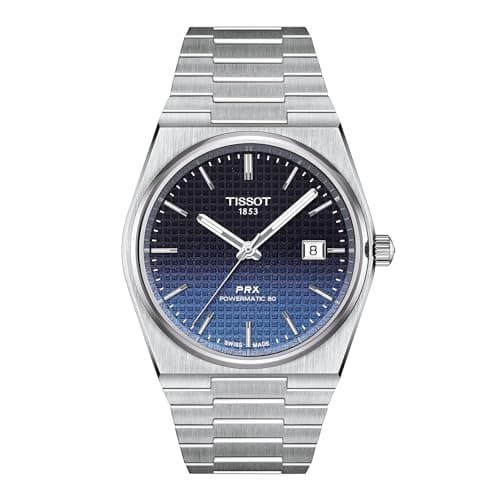 Tissot PRX Powermatic 80 The stretch pick that changes the game: a Swiss Powermatic 80 with an 80-HOUR power reserve, sapphire, and an integrated-bracelet case that reads like a luxury watch. | The 'if you can stretch past $500' upgrade | 8.6 | $850.00Amazon |
| 02 | 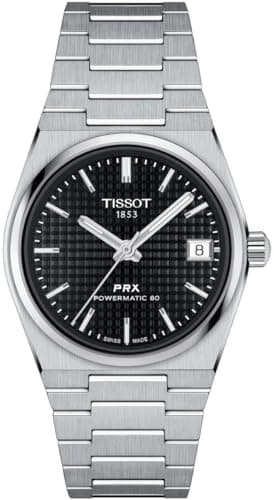 Tissot PRX Powermatic 80 35mm The 35mm PRX: the same 80-hour Swiss Powermatic 80, sapphire and integrated bracelet as the 40mm, in a case small wrists can actually wear. The stretch pick that isn't a compromise. | The best small automatic if the budget stretches | 8.5 | $795.00Amazon |
| 03 | 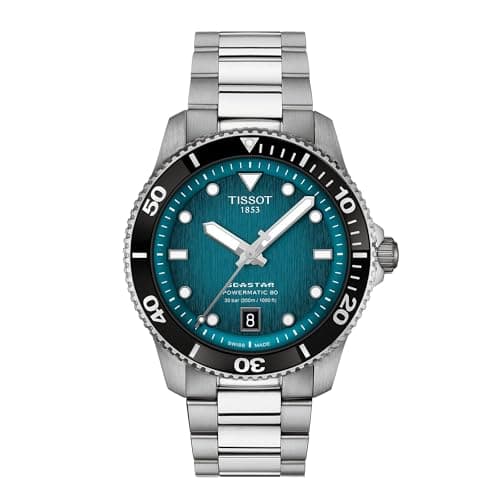 Tissot Seastar 1000 Powermatic 80 40mm The Swiss diver that makes sense: an 80-hour Powermatic 80, sapphire, a 300m screw-down case and a quick-release bracelet, in a 40mm case that fits normal wrists. | A genuine Swiss dive watch under $1,000 | 8.6 | $875.00Amazon |
| 04 | 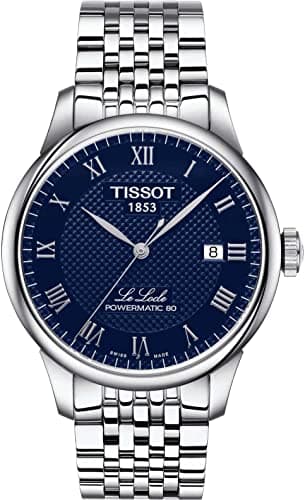 Tissot Le Locle Powermatic 80 39.3mm Tissot's classic dress automatic: Roman numerals, a guilloche-style dial, sapphire and the 80-hour Powermatic 80 in a 39.3mm case with a see-through back. | A Swiss dress automatic that isn't an integrated-bracelet watch | 8.3 | $795.00Amazon |
#ad · Live prices from the Amazon Product API, as of October 21, 2026. Where we have no verified live price we show none — a gap beats a number that has rotted.
The full breakdown
Every pick, in detail
#01 · Tissot
Tissot PRX Powermatic 80
The stretch pick that changes the game: a Swiss Powermatic 80 with an 80-HOUR power reserve, sapphire, and an integrated-bracelet case that reads like a luxury watch.
Best for
The 'if you can stretch past $500' upgrade
Who should skip it
You're strict about a $500 ceiling — the PRX sits above it. Under $500, the Seiko and Orient picks give you 90% of the wrist presence.
The case for
- 80-hour power reserve — leave it off all weekend and it's still running
- Sapphire crystal front and back, Nivachron antimagnetic hairspring
- Integrated bracelet design that punches far above its price
The catch
- Above the $500 line
- Integrated bracelet limits strap swaps
- Value
- 8.5
- Movement
- 9.0
- Build
- 9.0
- Legibility
- 8.0
- Fit
- 8.5
Price as of October 21, 2026. Prices change — Amazon's is the one that counts.
#ad · we may earn a commission from this link to Tissot PRX Powermatic 80
#02 · Tissot
Tissot PRX Powermatic 80 35mm
The 35mm PRX: the same 80-hour Swiss Powermatic 80, sapphire and integrated bracelet as the 40mm, in a case small wrists can actually wear. The stretch pick that isn't a compromise.
Best for
The best small automatic if the budget stretches
Who should skip it
You're holding a real budget ceiling — this is the most expensive watch we list, and the 37mm Citizen Tsuyosa gives you sapphire and a small integrated-bracelet case for a fraction of it.
The case for
- 80-hour power reserve — take it off Friday, it's still running Monday
- Anti-reflective sapphire, Nivachron hairspring, see-through caseback
- 35mm integrated-bracelet case with a quick-release bracelet
The catch
- Well above the $500 line
- Integrated bracelet limits strap swaps
- Value
- 7.5
- Movement
- 9.0
- Build
- 9.0
- Legibility
- 8.0
- Fit
- 9.0
Price as of October 21, 2026. Prices change — Amazon's is the one that counts.
#ad · we may earn a commission from this link to Tissot PRX Powermatic 80 35mm
#03 · Tissot
Tissot Seastar 1000 Powermatic 80 40mm
The Swiss diver that makes sense: an 80-hour Powermatic 80, sapphire, a 300m screw-down case and a quick-release bracelet, in a 40mm case that fits normal wrists.
Best for
A genuine Swiss dive watch under $1,000
Who should skip it
You are shopping under $500. The Orient Kamasu gives you sapphire and 200m for a fraction of this — the Seastar buys you Swiss finishing and the 80-hour movement, not a better dive rating you'll ever use.
The case for
- 300m water resistance with a screw-down crown and caseback
- 80-hour power reserve and a Nivachron antimagnetic balance spring
- Quick-release bracelet — strap swaps take seconds, no tools
The catch
- Costs several times a Seiko or Orient diver with the same job description
- Anti-reflective coating is on the underside of the crystal only
- Value
- 8.0
- Movement
- 9.0
- Build
- 9.0
- Legibility
- 8.5
- Fit
- 8.5
Price as of October 21, 2026. Prices change — Amazon's is the one that counts.
#ad · we may earn a commission from this link to Tissot Seastar 1000 Powermatic 80 40mm
#04 · Tissot
Tissot Le Locle Powermatic 80 39.3mm
Tissot's classic dress automatic: Roman numerals, a guilloche-style dial, sapphire and the 80-hour Powermatic 80 in a 39.3mm case with a see-through back.
Best for
A Swiss dress automatic that isn't an integrated-bracelet watch
Who should skip it
You want one watch for everything. At 30m this is a cuff-and-occasion watch, and the PRX or Seastar are the versatile Tissots.
The case for
- 80-hour reserve — the single most useful spec on a watch you rotate
- 39.3mm classic case with a see-through caseback
- Sapphire crystal on a genuinely dressy watch
The catch
- 30m water resistance — splashes only, like most dress watches
- The traditional Roman-numeral dial is a much more conservative look than a PRX
- Value
- 7.5
- Movement
- 9.0
- Build
- 8.5
- Legibility
- 7.5
- Fit
- 9.0
Price as of October 21, 2026. Prices change — Amazon's is the one that counts.
#ad · we may earn a commission from this link to Tissot Le Locle Powermatic 80 39.3mm
The one caliber you need to know
Powermatic 80.Swiss automatic, 80-hour reserve, hacks and hand-winds, fitted with a Nivachron balance spring that resists the magnetism which makes ordinary mechanical watches suddenly run minutes fast. Tissot does not publish a daily accuracy tolerance for it in the way Seiko and Orient do for their calibers, so we won't quote one — treat it as a good modern automatic and read the accuracy guide for what to expect.
Hamilton's H-10 and H-50, on the Hamilton page, are close relatives within the same group and share the long-reserve architecture.
Which Tissot should you buy?
- The one everyone wants → the PRX Powermatic 80 in 40mm. An integrated-bracelet sports watch with AR sapphire, 100m water resistance and a design that reads several times its price. Our default Tissot pick.
- Smaller wrists → the PRX 35mm. Identical movement, crystal and construction in a case that fits properly under 6.5 inches. It leads our small-wrist list, and there is no specification penalty for choosing it.
- Water → the Seastar 1000 in 40mm. 300m with a screw-down crown and a screw-down see-through caseback, a rotating bezel with a lumed insert, and a quick-release bracelet. The most capable watch Tissot sells at this money.
- A cuff → the Le Locle Powermatic 80 at 39.3mm. Roman numerals, sapphire, a see-through back and 30m of water resistance. A dress watch, and priced like the others despite doing less — buy it because you want that look.
The integrated-bracelet catch
Both PRX models have bracelets that are part of the case design, so you cannot fit a standard strap. If you enjoy swapping straps, that's a permanent constraint and the Seastar (with its quick-release bracelet) or the Le Locle are the flexible choices. The strap guide covers what quick-release actually saves you.
Where Tissot doesn't win
Three honest points. Water resistance per dollar — an Orient Kamasugives you 200m and sapphire for a fraction of a PRX's price. Lume— Seiko's LumiBrite outshines everything here. And service cost — a Swiss mechanical service runs into the hundreds and is due every 5–10 years, where many owners of a $300 Seiko simply replace the watch.
What you're buying is the 80-hour reserve, the antimagnetic hairspring, the finishing and the design. Those are real, and worth it to plenty of people — but here's the direct comparison with the Japanese alternative before you commit.
Where Tissot sits against the rest
Against Hamilton: same group, same movement family, different design language — Tissot is modern and sporty, Hamilton is military and heritage. Against Seiko and Citizen: Tissot wins on reserve, finishing and antimagnetism; the Japanese brands win on price, lume and water resistance per dollar. All of them are ranked together on the under-$1,000 list, and the Swiss field alone on the Swiss shortlist.
Two pages that go deeper on what powers this lineup: the Powermatic 80 explained, and the 80-hour power reserve shortlist where every Tissot automatic here appears alongside the Hamiltons.
Questions
FAQ
Which Tissot automatic is the best buy?
The PRX Powermatic 80 in 40mm for most people — an 80-hour Swiss movement, AR sapphire, 100m water resistance and an integrated-bracelet design that looks far more expensive than it is. Choose the 35mm version for a smaller wrist, or the Seastar 1000 if you want 300m and a rotating bezel.
Is the Powermatic 80 a good movement?
Yes. It's a Swiss automatic with an 80-hour power reserve — double what most affordable Japanese calibers hold — and a patented Nivachron balance spring that resists magnetism. Tissot doesn't publish a daily accuracy tolerance for it, so we don't quote one.
Is a Tissot worth twice a Citizen or Orient?
Only for specific reasons: the 80-hour power reserve, the antimagnetic hairspring, Swiss finishing and the design. On water resistance and lume the Japanese watches often win, and an Orient Kamasu gives you sapphire and 200m for a fraction of the price.
Specs & sources
Specifications on this page are compiled from manufacturer datasheets, official product pages, and published standards. Prices are pulled live from Amazon and date-stamped; nothing is invented.
Keep reading