Buying guide
Orient Mako 40 vs Citizen Tsuyosa
Two Japanese automatics with sapphire crystals at close to the same money. One is a 200m diver whose maker publishes every fit measurement; the other is an integrated-bracelet sports watch whose maker publishes no case height at all.
Buy the Orient if you want to know what you are getting. Buy the Citizen if you want the integrated-bracelet look and accept that you cannot check how it will wear. These two sit close together on price, both are Japanese, both publish a sapphire crystal at a price where most rivals fit mineral glass, and both use an in-house caliber that hacks and hand-winds. On the spec sheet they diverge in one direction on capability and in another on disclosure.
Orient publishes all four fit measurements for the AC0Q Diver - 39.9mm diameter, 12.8mm thick, a 46.5mm lug-to-lug and 20mm lugs - plus 200mof water resistance, a screwed-down crown and a 120-click unidirectional bezel. Citizen's own page for the Tsuyosa NJ0150 publishes a 40mm case width, a 9.1mm lug width, 50m, the caliber 8210 and a 42-hour reserve - and no case thickness and no lug-to-lug. We checked both pages the day this comparison was written.
That gap matters more here than it would on an ordinary watch, because the Tsuyosa's bracelet is integrated: you cannot change it, so how it wears is fixed at purchase. Prices are live, and both makers' own list prices sit above the street price - read the chip, not the list. Our method is public.
Disclosure
Some links here are affiliate links — mostly to Amazon. If you buy through one we may earn a small commission, at no extra cost to you. It never changes which watch we pick or the price you pay. Prices are pulled live and date-stamped; where we can't verify one, we show none. Full disclosure.
The contenders
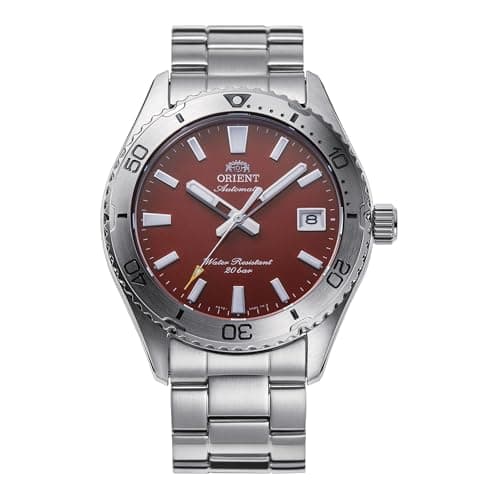
Orient
Orient Mako 40 (AC0Q Diver)
Price as of November 22, 2026. Prices change — Amazon's is the one that counts.
#ad · we may earn a commission from this link to Orient Mako 40 (AC0Q Diver)
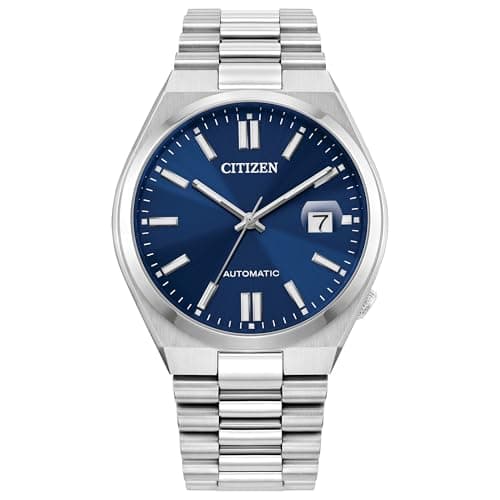
Citizen
Citizen Tsuyosa NJ0150
$495.0030% off
Price as of November 22, 2026. Prices change — Amazon's is the one that counts.
#ad · we may earn a commission from this link to Citizen Tsuyosa NJ0150
Side by side
The two watches, side by side
Published specifications from Orient's and Citizen's own product pages plus the cited caliber references. Neither brand publishes a daily accuracy tolerance for these calibers.
| Watch | Published specs | Best for | Price |
|---|---|---|---|
| OrientOrient Mako 40 (AC0Q Diver) | F6722 · in-house200m WRSapphire39.9mmL2L 46.5mm | A 200m in-house diver on a normal wrist | $249.00 |
| CitizenCitizen Tsuyosa NJ0150 | Cal. 821042h reserve50m WRSapphire40mm | The integrated-bracelet look without the Swiss price | $346.50 |
#ad · we may earn a commission · Specs as published by the manufacturer (see Sources). Live prices from the Amazon Product API, as of November 22, 2026 — where we have no verified live price we show none rather than a number that has rotted.
Head-to-head
| Factor | Orient Mako 40 (AC0Q Diver) | Citizen Tsuyosa NJ0150 |
|---|---|---|
| Caliber | F6722, in-house | 8210, in-house |
| Power reserve | Approx. 40 hours | 42 hours, published |
| Hacks / hand-winds | Both, published | Both |
| Published daily accuracy | Not published | Not published |
| Crystal | Sapphire | Sapphire |
| Water resistance | 200m | 50m, stated as still-water swimming |
| Rotating dive bezel | Yes, 120-click unidirectional | No |
| Crown | Screwed down | Not published |
| Diameter | 39.9mm | 40mm case width |
| Case thickness | 12.8mm | Not published |
| Lug-to-lug | 46.5mm | Not published |
| Lug width | 20mm, standard | 9.1mm, integrated bracelet |
| Strap options | Any 20mm strap or bracelet | Citizen's own parts only |
The disclosure gap is the whole comparison
Four rows in that table say "not published," and three of them are Citizen's. Two of those three are the measurements that decide whether a watch suits your wrist: case thickness and lug-to-lug. Citizen gives you a 40mm case width and a lug width quoted to a tenth of a millimeter, and then stops.
Orient gives you the complete set. 12.8mm tall and 46.5mmtip to tip tells you almost everything about how the AC0Q will sit: you can measure the flat of your wrist, compare it to 46.5mm, and know before you order. You cannot run that check on the Tsuyosa at all. That is not a quality judgment about Citizen's watchmaking, which is good - it is a judgment about buying blind.
It also has a specific consequence here. Because the Tsuyosa's bracelet is integrated - the 9.1mm fitting is a Citizen part, not a strap size - you cannot adjust how the watch wears afterwards by changing what it is on. On the Orient you can: 20mm is the most-stocked strap width made, so the same watch can be a steel-bracelet diver, a leather dress watch or a nylon beater. Changing a strap takes two minutes.
Water resistance: 200m against Citizen's own caveat
This row is not close, and the interesting part is Citizen's own wording. The NJ0150 is published as WR50 / 5 bar with the qualifier "still water swimming" printed by Citizen itself - the maker is telling you where the limit is. The Orient publishes 200m, a screwed-down crown and a 120-click unidirectional timing bezel, which is the real diving specification and the threshold our water-resistance guide treats as the diving line.
Be honest about what that is worth to you, though. If you swim in a watch occasionally and never dive, 50m with Citizen's caveat genuinely covers it, and the 200m case is the reason the Orient is 12.8mm tall - a thicker crystal, a deeper gasket seat and a crown tube all cost height. The Orient is the more capable watch; it is also the chunkier one, and neither brand publishes a figure that lets you compare their heights directly.
The movements are closer than the brands suggest
Both are genuinely in-house calibers, both hack, both hand-wind, and neither maker publishes a daily accuracy tolerance. Citizen publishes 42 hoursof reserve against Orient's approximately 40- a real if marginal Citizen win, and Citizen deserves credit for stating the figure where Orient's page is vaguer.
On accuracy, treat any number you read with suspicion. The -15/+25 seconds a day often quoted for Orient's F-series comes from caliber references, not from Orient's product page, and Citizen publishes nothing at all for the 8210. So the common assumption that one of these will keep better time than the other has no published support in either direction. What Orient's in-house calibers are and the automatics that do publish a tolerance cover the ground properly. Both watches, for what it is worth, are built on the modern essentials this site cares about - hacking and hand-winding- which older budget calibers like Seiko's 7S26 do not offer.
Both list prices are fiction. Read the live chip
This is worth a section because both makers publish numbers you should ignore. Citizen's own store shows the NJ0150 at $396 marked down from a $495 list. Orient's own store lists the AC0Q at $530 and discounts it to $370. Neither figure is what these watches change hands for, and the marketplace price is routinely well below both - which is exactly why the price on this page is pulled live rather than typed in.
The practical consequence: the gap between these two watches moves week to week, and on some weeks the 200m sapphire diver is the cheaperwatch. If you are deciding on price, decide on today's price. How to buy one of these without getting caught covers the seller checks that matter more than the sticker.
What each one is actually for
The Orient AC0Q is a tool watch you can dress down. 200m, sapphire, a screwed-down crown, a timing bezel and standard 20mm lugs make it the more versatile buy in every direction except one: it looks like a dive watch, because it is one. It is the pick on the under-$300 dive shortlist and it is the only watch in that bracket publishing a thickness, a lug-to-lug and a lug width.
The Citizen Tsuyosa is a design buy, and a good one. The integrated bracelet is a genuinely luxury-coded shape that nothing else at this money does as convincingly, the sapphire crystal is a real specification rather than a marketing line, and the 8210 is a known quantity. If you want a watch that reads expensive at a desk, this is the cheaper and better-looking answer - the integrated-bracelet shortlist ranks it, and PRX versus Tsuyosa is the comparison to read if the Swiss version is tempting you.
Which to buy
- Buy the Orient Mako 40 if you want one watch for everything, if you ever swim or get it wet properly, if you want to change straps, or if knowing the fit before ordering matters to you. Our full AC0Q review.
- Buy the Citizen Tsuyosa if the integrated-bracelet look is the reason you are shopping, if the watch lives indoors, and if you are comfortable ordering without a published thickness or span. Our Tsuyosa review.
- Buy neitherif your wrist is under about 6.5 inches - both are 40mm watches, and the Orient's 46.5mm span is long for a small wrist while the Citizen's is unknown. The small-wrist shortlist ranks only watches whose makers publish a span, and the slim shortlist does the same for height.
- Buy the Orient Mako II insteadif you want the day-date layout: the F6922 in the Mako II and Ray II adds a day window that the AC0Q's F6722 does not have. How the Orient divers differ.
One naming trap, on both sides
Neither watch is called what the market calls it. Orient does not use the name "Mako 40" - the reference is RA-AC0Q, and the Mako name belongs to the older F6922 divers, so shop the reference rather than the nickname. And Citizen sells more than one Tsuyosa: the NJ0150 compared here is the 40mm, and there is a 37mm NJ0200 with the same caliber and crystal in a smaller case. If a listing says only "Tsuyosa" or only "Mako," it has not told you which watch you are buying.
Questions
FAQ
Is the Orient Mako 40 or the Citizen Tsuyosa the better watch?
On published specifications the Orient wins on capability: 200m against 50m, a screwed-down crown, a timing bezel, standard 20mm lugs, and a full set of fit measurements. The Citizen wins on design and on one spec - a published 42-hourreserve against Orient's approximately 40. Both publish sapphire and both calibers hack and hand-wind.
How thick is the Citizen Tsuyosa?
Citizen does not publish a case thickness for the NJ0150. Its product page gives a 40mm case width, a 9.1mm lug width, 50m water resistance, caliber 8210 and a 42-hour reserve - and no height and no lug-to-lug. Figures you see quoted for the thickness come from retailers, not from Citizen, which is why we do not rank it on our slim shortlist.
Can you change the bracelet on a Citizen Tsuyosa?
Not for a standard strap. The bracelet is integrated and Citizen publishes the fitting as 9.1mm, which is a case-specific attachment rather than a normal lug width - so a 20mm strap will not fit. The Orient takes any 20mm strap, which is the most-stocked width there is.
Can you dive with the Citizen Tsuyosa?
No. Citizen publishes 50m (5 bar) and qualifies it in its own specification as still-water swimming. There is no rotating dive bezel and no published screw-down crown. The Orient publishes 200m with a screwed-down crown and a 120-click unidirectional bezel, which is the real dive specification.
Do both watches have sapphire crystals?
Yes - and that is the reason this is a close comparison at all. Both Orient and Citizen publish a sapphire crystal for these references, at a price where Seiko generally fits Hardlex and Orient's own cheaper references fit mineral. What the three crystal materials actually do explains why it is the upgrade you notice in year three.
Does either brand publish an accuracy figure?
Neither does. Orient publishes no daily tolerance on its page for the AC0Q, and Citizen publishes none for the 8210. The -15/+25 seconds a day often attached to Orient's F-series comes from caliber references rather than from Orient, which makes it a caliber-family figure rather than a promise about an individual watch.
Specs & sources
Specifications on this page are compiled from manufacturer datasheets, official product pages, and published standards. Prices are pulled live from Amazon and date-stamped; nothing is invented.
- Orient AC0Q Diver 40mm, RA-AC0Q09R30B (official) ↗
- Orient caliber F6722 reference (in-house, 22 jewels, 21,600 bph, hacks + hand-winds, date only) ↗
- Citizen Tsuyosa NJ0150-56L (official) ↗
- Citizen Tsuyosa NJ0200-50W 37mm (official) ↗
- Orient caliber F6922 reference ↗
- ISO 22810 / water-resistance meaning ↗
Keep reading