Buying guide
Best Dive Watches Under $300
Under $300 a real dive watch is still possible - but the honest list is four automatics, three of them from one brand, and only one of them publishes everything you need to know before you order.
$300 is the last price at which a real dive watch is still a real dive watch. Below it you can still get a published 200m rating, a screw-down crown and a unidirectional rotating bezel - the three things that separate a diver from a watch with a dive-watch dial. Above it you start buying sapphire, better finishing and Swiss movements. This page is about the band itself: what clears the bar, what each pick gives up, and where the money stops working.
The answer is shorter than the category deserves. One brand owns this band - three of the four qualifying automatics are Orient, and the fourth costs about a quarter of what they do. We would rather print that than pad the list with 100m watches wearing dive bezels, or with no-name automatics whose makers will not name a caliber or quantify a water rating. Every pick below was checked for availability on the day this page was written; anything we could not confirm was left off.
Specifications come from the manufacturers' own published data and the caliber references cited at the foot of the page. Prices are live, which matters more here than on almost any other page on this site - the entire reason this bracket exists is that the marketplace price of these watches sits well below the makers' own list prices. Here is how we score.
Disclosure
Some links here are affiliate links — mostly to Amazon. If you buy through one we may earn a small commission, at no extra cost to you. It never changes which watch we pick or the price you pay. Prices are pulled live and date-stamped; where we can't verify one, we show none. Full disclosure.
The short answer
Quick picks
| # | Product | Best for | Score | Price |
|---|---|---|---|---|
| 01 | 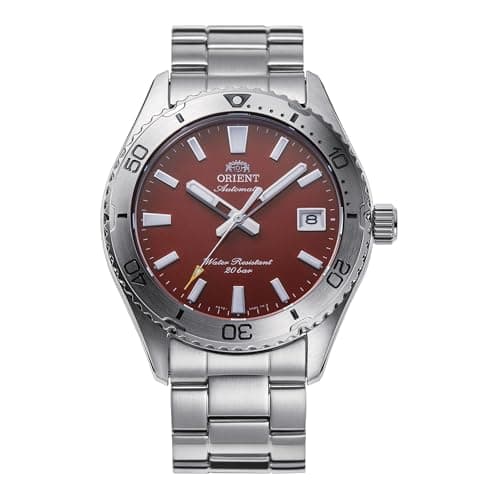 Orient Mako 40 (AC0Q Diver) Sapphire, 200m and the in-house F6722 in a 39.9mm case on 20mm lugs — the Orient diver that takes an ordinary strap and reads smaller than a Kamasu. | A 200m in-house diver on a normal wrist | 8.3 | $253.25Amazon |
| 02 | 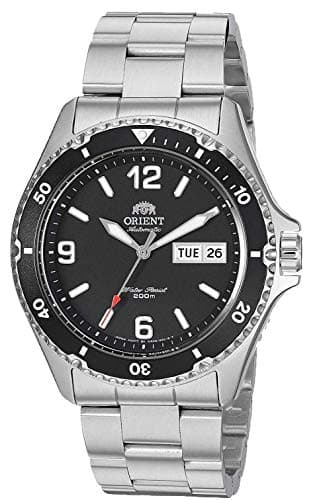 Orient Mako II The Kamasu's cheaper sibling: same in-house F6922 and 200m case, but mineral crystal instead of sapphire. A dive-watch bargain if you don't need the sapphire. | A 200m in-house diver at the lowest honest price | 8.1 | $230.00Amazon |
| 03 | 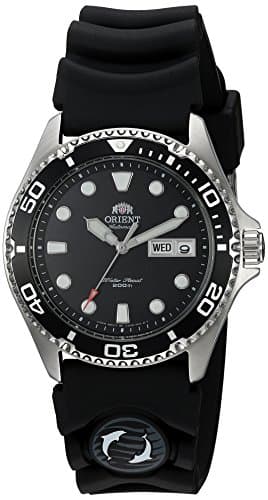 Orient Ray II The Mako's twin with a different dial and bezel: in-house F6922, 200m, mineral crystal. Same value story, pick on looks. | A 200m in-house diver — choose Ray or Mako on styling | 8.1 | $259.00Amazon |
| 04 | 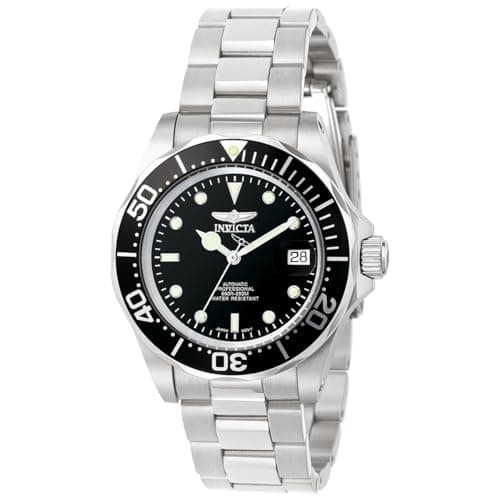 Invicta Pro Diver 8926OB The cheapest automatic diver worth owning. A Miyota 8215, 200m case and a Submariner-style look for often under $100 — the punchline that's actually good. | The absolute-lowest-price automatic diver | 7.7 | $91.21Amazon |
| 05 | 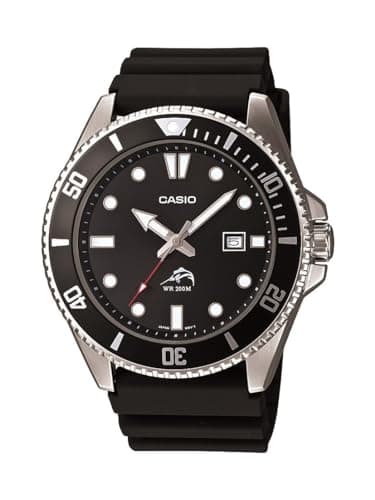 Casio Duro MDV106 Not automatic — QUARTZ — but the honest value benchmark every automatic under $150 has to beat. 200m, screw-down crown, often under $60. | When you don't actually need automatic | 7.9 | $68.99Amazon |
#ad · Live prices from the Amazon Product API, as of October 20, 2026. Where we have no verified live price we show none — a gap beats a number that has rotted.
Side by side
Every pick, spec for spec
Movement, crystal, water resistance and case size for all five. Specs are as published by Orient, Invicta and Casio plus the cited caliber references; prices are live.
| Watch | Published specs | Best for | Price |
|---|---|---|---|
| OrientOrient Mako 40 (AC0Q Diver) | F6722 · in-house200m WRSapphire39.9mmL2L 46.5mm | A 200m in-house diver on a normal wrist | $253.25 |
| OrientOrient Mako II | F6922 · in-house-15/+25 sec/day200m WRMineral41.5mm | A 200m in-house diver at the lowest honest price | $230.00 |
| OrientOrient Ray II | F6922 · in-house-15/+25 sec/day200m WRMineral41.5mm | A 200m in-house diver — choose Ray or Mako on styling | $259.00 |
| InvictaInvicta Pro Diver 8926OB | Miyota 8215 · 21J-20/+40 sec/day200m WRMineral40mm | The absolute-lowest-price automatic diver | $91.21 |
| CasioCasio Duro MDV106 | Quartz±15 sec/MONTH200m WRMineral44mm | When you don't actually need automatic | $68.99 |
#ad · we may earn a commission · Specs as published by the manufacturer (see Sources). Live prices from the Amazon Product API, as of October 20, 2026 — where we have no verified live price we show none rather than a number that has rotted.
The full breakdown
Every pick, in detail
#01 · Orient
Orient Mako 40 (AC0Q Diver)
Sapphire, 200m and the in-house F6722 in a 39.9mm case on 20mm lugs — the Orient diver that takes an ordinary strap and reads smaller than a Kamasu.
Best for
A 200m in-house diver on a normal wrist
Who should skip it
You want the day-date layout or a published accuracy spec — the Mako II and Kamasu use the F6922, which gives you both. And Orient does not call this a Mako, so shop the RA-AC0Q reference, not the name.
The case for
- 39.9mm on 20mm lugs — standard strap widths, unlike the Kamasu's 22mm
- Sapphire crystal and a screw-down crown as standard
- In-house F6722 hacks and hand-winds, ~40h reserve
The catch
- Date only — no day window, unlike the F6922 in the Mako II and Ray II
- Orient publishes no daily accuracy tolerance for this reference
- 12.8mm thick, so it is compact across the wrist rather than slim
- Value
- 9.0
- Movement
- 7.5
- Build
- 8.5
- Legibility
- 8.0
- Fit
- 8.5
Price as of October 20, 2026. Prices change — Amazon's is the one that counts.
#ad · we may earn a commission from this link to Orient Mako 40 (AC0Q Diver)
#02 · Orient
Orient Mako II
The Kamasu's cheaper sibling: same in-house F6922 and 200m case, but mineral crystal instead of sapphire. A dive-watch bargain if you don't need the sapphire.
Best for
A 200m in-house diver at the lowest honest price
Who should skip it
You'll be annoyed by a scratch on the crystal — spend a little more on the Kamasu's sapphire.
The case for
- In-house F6922 — hacks and hand-winds
- 200m water resistance
- Usually the cheapest way into an Orient diver
The catch
- Mineral crystal (the Kamasu's sapphire is worth the small step up)
- Basic clasp
- Value
- 9.0
- Movement
- 8.0
- Build
- 7.5
- Legibility
- 8.0
- Fit
- 8.0
Price as of October 20, 2026. Prices change — Amazon's is the one that counts.
#ad · we may earn a commission from this link to Orient Mako II
#03 · Orient
Orient Ray II
The Mako's twin with a different dial and bezel: in-house F6922, 200m, mineral crystal. Same value story, pick on looks.
Best for
A 200m in-house diver — choose Ray or Mako on styling
Who should skip it
You want sapphire — the Kamasu is the same watch with a sapphire crystal for a little more.
The case for
- In-house F6922, hacks and hand-winds
- 200m WR
- Great value on a rubber strap
The catch
- Mineral crystal
- Near-identical to the Mako — mostly a looks choice
- Value
- 9.0
- Movement
- 8.0
- Build
- 7.5
- Legibility
- 8.0
- Fit
- 8.0
$279.987% off
Price as of October 20, 2026. Prices change — Amazon's is the one that counts.
#ad · we may earn a commission from this link to Orient Ray II
#04 · Invicta
Invicta Pro Diver 8926OB
The cheapest automatic diver worth owning. A Miyota 8215, 200m case and a Submariner-style look for often under $100 — the punchline that's actually good.
Best for
The absolute-lowest-price automatic diver
Who should skip it
The homage styling bothers you, or you want a movement that hacks — the Orient Mako is the honest step up.
The case for
- 200m WR and a screw-down crown for around $100
- Miyota 8215 hand-winds (no hacking)
- 40mm — an easy, wearable size
The catch
- Unapologetic Rolex Submariner homage
- 8215 doesn't hack; QC can be uneven
- Value
- 9.0
- Movement
- 6.5
- Build
- 6.5
- Legibility
- 8.0
- Fit
- 8.5
Price as of October 20, 2026. Prices change — Amazon's is the one that counts.
#ad · we may earn a commission from this link to Invicta Pro Diver 8926OB
#05 · Casio
Casio Duro MDV106
Not automatic — QUARTZ — but the honest value benchmark every automatic under $150 has to beat. 200m, screw-down crown, often under $60.
Best for
When you don't actually need automatic
Who should skip it
You specifically want a mechanical, self-winding movement and the feel that comes with it — that's the whole reason this site exists. But know what you're paying extra for.
The case for
- 200m WR for around $50 — unbeatable value
- Quartz accuracy: seconds per MONTH, not per day
- Set it and forget it — no winding, no daily drift
The catch
- Quartz, so no sweeping seconds or mechanical charm
- Resin strap most people swap
- Value
- 9.5
- Movement
- 7.0
- Build
- 7.0
- Legibility
- 8.5
- Fit
- 7.5
$84.9519% off
Price as of October 20, 2026. Prices change — Amazon's is the one that counts.
#ad · we may earn a commission from this link to Casio Duro MDV106
The bar: what has to be true before a watch gets on this page
A dive watch is one of the few watch categories with real engineering behind the name, so the entry test is not a matter of taste. Four things had to be true:
- A published 200m water-resistance rating.Not "water resistant," not 100m, not a depth printed on a dial with no figure in the specifications. 200m with a screw-down crown is the point at which swimming and diving stop being a risk you are taking. What each rating actually permits is here.
- A screw-down crown. The crown is the biggest hole in the case. A push-pull crown can be knocked out of position in a bag; a screwed-down one cannot.
- A unidirectional rotating bezel. It turns one way only, so a knock can only ever shorten the elapsed time you are reading, never extend it. That is a safety feature, and it is the single most common thing missing from watches sold as divers. How to actually use one.
- A live price under $300, and stock to buy. List price is not price. Two of these watches carry maker list prices in the $400-$530 range and sell for roughly half that, which is the only reason this page can exist at all.
A fifth criterion we deliberately did not apply is a sapphire crystal. At this ceiling it would leave one watch standing, and a mineral crystal on a sub-$250 watch is a reasonable trade rather than a disqualification - the difference is real but narrower than people think. What sapphire does buy, and which single pick here has it, is covered below.
What the makers publish - and the gap that decides the ranking
Every pick here clears the dive bar, so the ranking is decided by the next question: how much does the maker tell you before you spend the money? The spread is wider than the price spread.
| Published spec | Orient AC0Q Diver | Orient Mako II / Ray II | Invicta 8926OB |
|---|---|---|---|
| Caliber named | Yes - F6722 | Yes - F6922 | Yes - Miyota 8215 |
| Hacking seconds | Yes | Yes | No |
| Hand-winding | Yes | Yes | Yes |
| Power reserve | Approx. 40 hours | Approx. 40 hours | Not published by Invicta |
| Case diameter | 39.9mm | 41.5mm | 40mm |
| Case thickness | 12.8mm | Not published | Not published |
| Lug-to-lug | 46.5mm | Not published | Not published |
| Lug width | 20mm | Not published | Not published |
| Crystal | Sapphire | Mineral | Mineral |
| Crown | Published as screwed-down | Screw-down | Screw-down |
Read the three fit rows together. Only one watch on this page publishes a thickness, a lug-to-lug span and a lug width - the Orient AC0Q Diver, at 12.8mm, 46.5mm and 20mm. Those are the three numbers that decide whether a watch fits you and whether straps for it are easy to find, and on every other pick here you are buying them blind. Lug-to-lug, not diameter, is what hangs over the edge of your wrist - which is why a 39.9mm watch with a published 46.5mm span is a safer order than a 40mm watch with no span published at all.
One honest qualification on accuracy. The caliber references cited below specify Orient's F-series at roughly -15 to +25 seconds a day, and the Invicta is sold with a -20 to +40 figure for its Miyota 8215. But Orient's own product pages for these references publish no daily tolerance at all - we checked them while writing this page. Treat those windows as caliber-family specifications rather than a promise attached to your individual watch, and read what they mean in practice before you judge a new watch for running fast.
1. Orient AC0Q Diver - the only one that publishes everything
This is the pick, and on specification it is not close. Orient publishes a sapphire crystal, 200m, a 120-click unidirectional bezel, a screwed-down crown and the full set of fit measurements - 39.9mm across, 12.8mm thick, 46.5mm lug-to-lug, 20mm lugs - driven by the in-house F6722, which hacks, hand-winds and holds about 40 hours.
Sapphire at this price is the headline. It is the one specification here you cannot sensibly fix later, and it is the difference between a watch that still looks new in three years and one wearing a web of fine scratches across the crystal.
The second reason it leads is a pricing quirk worth understanding before you buy anything on this page. Orient's own store lists this reference at $530 and discounts it to $370- both above this page's ceiling. The marketplace listing sits well below that, which is the entire reason a sapphire 200m diver appears on an under-$300 page. Check the live price before you treat it as a given: this is a marketplace price, not a price Orient has set, and it can move.
The cons, stated plainly. The 20mm lug width is the narrower of the two common diver widths, so the enormous 22mm Seiko strap aftermarket does not fit it. Orient publishes no daily accuracy tolerance for the reference. And at 39.9mm with a 46.5mm span this is a genuinely mid-sized watch - if you came here wanting the presence of a 44mm diver, it is not this. The full case for it is in our Orient Mako 40 review.
2 and 3. Mako II and Ray II - the same watch, two different buys
These two are what most people mean by "affordable Orient diver," and the important thing is how little separates them. Both run the in-house F6922 - day-date, hacking, hand-winding, around 40 hours - in a 41.5mm 200m case with a mineral crystal and a screw-down crown. What differs is the dial and bezel treatment and what is on the wrist: the Mako II ships on a steel bracelet, the Ray II on rubber.
That makes it a straps-and-money decision rather than a specification one. A steel bracelet costs more to make and is harder to replace well, so the Mako II is usually the better buy if you want one watch to do everything. The Ray II on rubber is the one to take if you already know you will fit a strap of your own - and rubber is the more honest choice for a watch you will genuinely swim in. The two are compared reference by reference here.
The cons on both. The mineral crystal is the obvious one: fair at the price, but it will mark. Neither reference publishes a thickness or a lug-to-lug, so fit is a gamble on a wrist under about 6.5 inches. The bracelet on the Mako II is the weakest part of the watch and the first thing many owners replace. And the day wheel on the F6922 steps through a second language before it lands on English, which is normal for the caliber and surprises people who have not met it before.
4. Invicta 8926OB - the $90 question
The 8926OB is the cheapest automatic here by a wide margin and it still clears the dive bar: 200m, a screw-down crown, a rotating bezel, a 40mm case and a Miyota 8215 - one of the most-produced automatic calibers in the world, and repairable by any watchmaker. At this price the alternative is quartz or a watch that will not tell you what is inside it.
What you give up is specific. The 8215 does not hack, so the seconds hand keeps running while you set the time and you cannot sync the watch to the second - what hacking is, and why it matters more than it sounds. Invicta publishes no power reserve, no thickness and no lug-to-lug. Quality control varies more than on the Orients, which is the consistent pattern in owner reporting rather than something we have measured ourselves. And it is an unmistakable Submariner homage, which some buyers want and others will not wear - the honest case for and against homages. The full picture is in our 8926 review.
5. Casio Duro MDV106 - the benchmark, and it is quartz
The Duro is last on purpose, and it is here because leaving it off would be dishonest. It is a 200m watch with a screw-down crown and a rotating bezel for less than any automatic here, and because it is quartz it keeps time to about ±15 seconds a month - a different order of accuracy from anything mechanical on this list.
So the Duro is the number every automatic here has to justify itself against, and on accuracy none of them can. What the automatics offer instead is the thing you are actually buying: a mechanical movement you can watch running, no battery to replace, and a watch that can be serviced for decades rather than replaced. That trade, argued properly, is here. If keeping time is what you care about most, buy the Duro and spend the difference elsewhere.
The cons. It is 44mm and wears every millimeter of it, the crystal is mineral, and the bezel is friction-fit rather than the ratcheting click of the Orients. It is also, unambiguously, a quartz watch on a mechanical-watch site.
What another $150 buys you
The gap between this page and a $400-$500 diver is narrower than the price gap suggests, and it comes down to three things: a sapphire crystal as standard rather than on one reference, better lume, and case finishing. The clearest step up is the Seiko Prospex SRPF03- 200m, the 4R35, and Seiko's LumiBrite, which is the best lume in the class by a distance and the one specification you cannot judge from a product photo.
If your budget can stretch, read the full affordable diver rankingbefore you commit - it covers the field up to the point where Swiss divers begin, including references that sit just above this page's ceiling. If it cannot, the three Orients here are a genuine buy rather than a consolation prize: a published 200m case and an in-house hacking caliber for the price of a mid-range pair of headphones is the best value in watches.
Who should skip this bracket entirely
- Anyone with a wrist under about 6.25 inches. The qualifying automatics run 39.9mm to 41.5mm, and only one of them publishes a lug-to-lug. Start with the small-wrist shortlist instead.
- Anyone who wants a dress watch. A 200m case needs depth and a bezel needs diameter, so none of these slides under a shirt cuff. The dress roundup is a different page for a different job.
- Anyone who needs the time to be right to the second. See the Duro above, or the accuracy shortlist if it has to be mechanical.
- Anyone shopping a brand we have not listed. There are hundreds of 200m-badged automatics under $300 from brands that name no caliber and publish no tolerance. We do not list them, and this is how to vet one yourself.
Questions
FAQ
What is the best dive watch under $300?
The Orient AC0Q Diver. It is the only pick in the bracket with a published sapphire crystal, and the only one that publishes its thickness, lug-to-lug and lug width alongside the 200m rating, the 120-click unidirectional bezel and the screwed-down crown. The Mako II is the cheaper way into the same 200m, in-house, hacking formula with a mineral crystal.
Can you actually dive with a $250 watch?
A 200m rating with a screw-down crown covers recreational swimming and diving, and all four automatics here publish one. What none of them carries is ISO 6425 certification, which adds tested requirements for shock, magnetism, salt water and bezel markings. For swimming, snorkeling and getting the watch wet daily, 200m is the specification that matters.
Why are three of the four picks Orient?
Because Orient is the only brand currently selling a 200m automatic with an in-house hacking caliber at this price. Seiko's 200m Prospex divers start higher, Citizen's ISO-rated Promaster sits above the ceiling, and the brands that undercut Orient almost never name a caliber or publish a tolerance. A list that pretended otherwise would be padding.
Is a mineral crystal a dealbreaker on a dive watch?
No, but it is the specification you will notice first. Mineral glass resists shattering well and scratches more easily than sapphire, and a diver lives a harder life than a dress watch. If you want sapphire under $300 the AC0Q Diver is the only pick here that publishes it; above the ceiling it becomes standard.
Should I buy the Mako II or the Ray II?
They share the F6922, the 200m case, the mineral crystal and the 41.5mm diameter, so it is a question of what is on the wrist and what you want to pay. The Mako II comes on a steel bracelet and is the better single-watch buy; the Ray II on rubber is the better choice if you plan to fit your own strap, or will genuinely swim in it.
Specs & sources
Specifications on this page are compiled from manufacturer datasheets, official product pages, and published standards. Prices are pulled live from Amazon and date-stamped; nothing is invented.
- Orient AC0Q Diver 40mm, RA-AC0Q09R30B (official) ↗
- Orient caliber F6722 reference (in-house, 22 jewels, 21,600 bph, hacks + hand-winds, date only) ↗
- Orient caliber F6922 reference ↗
- Orient movements explained (F6922/F6724) ↗
- Miyota 8215 (official) ↗
- Miyota caliber 8215 reference ↗
- Casio MDV-106-1AV (official) ↗
- Seiko Prospex SRPF03 (official) ↗
- ISO 22810 / water-resistance meaning ↗
Keep reading