Buying guide
Best Automatic Watches For Travel
Everyone sells you a GMT. The specification that actually ruins a trip is power reserve, because a watch in a bag for two days is a watch you have to reset in an airport.
The pick is the Tissot PRX Powermatic 80 — an 80-hour power reserve, 100m of water resistance and a sapphire crystal in a 40mm case, which is the combination that survives being packed. It is for the traveller who takes one watch, wears it to dinner, swims in it, and wants it still running after two days in a carry-on. If the budget is the constraint, skip to the Orient Mako 40: sapphire and 200m for a fraction of the money, with the reserve as the trade.
Now the unpopular part. Almost nobody needs a GMT watch to travel. A second time zone on your wrist is a genuinely useful thing if you need to track home time continuously — if you are on calls, trading, or coordinating with family across eight hours every day. For a holiday, you land, you change the hour hand, and you are done. The specifications that actually decide whether a mechanical watch is pleasant to travel with are, in order: power reserve, water resistance, whether it hacks, and whether it fits under a cuff and through a long-haul sleep.
Every pick below is ranked on published manufacturer specifications, with live prices from the Amazon Product Advertising API and an "as of" date on every number. If you do want the second time zone, the honest shortlist is best GMT watches under $500 — it is a short list, and that page explains why. Our method is in how we pick.
Disclosure
Some links here are affiliate links — mostly to Amazon. If you buy through one we may earn a small commission, at no extra cost to you. It never changes which watch we pick or the price you pay. Prices are pulled live and date-stamped; where we can't verify one, we show none. Full disclosure.
The short answer
Quick picks
| # | Product | Best for | Score | Price |
|---|---|---|---|---|
| 01 | 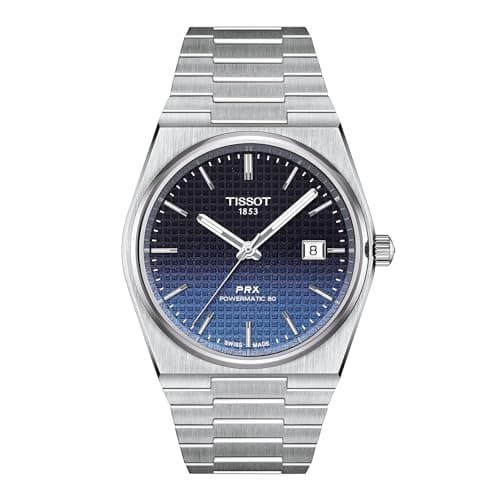 Tissot PRX Powermatic 80 The stretch pick that changes the game: a Swiss Powermatic 80 with an 80-HOUR power reserve, sapphire, and an integrated-bracelet case that reads like a luxury watch. | The 'if you can stretch past $500' upgrade | 8.6 | $850.00Amazon |
| 02 | 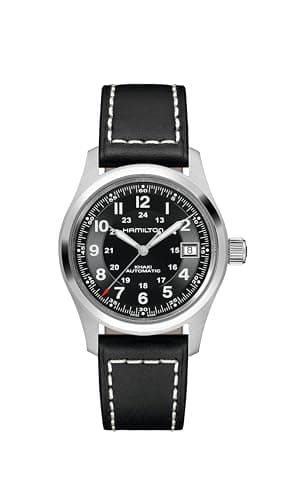 Hamilton Khaki Field Auto 38mm The field-watch benchmark. Swiss H-10 movement with an 80-HOUR reserve, sapphire, and a 38mm case that's the correct size. Usually a stretch past $500 — and usually worth it. | The definitive field watch, if the budget stretches | 8.8 | $795.00Amazon |
| 03 | 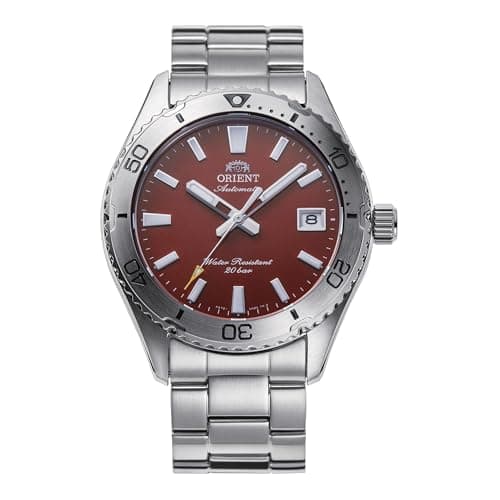 Orient Mako 40 (AC0Q Diver) Sapphire, 200m and the in-house F6722 in a 39.9mm case on 20mm lugs — the Orient diver that takes an ordinary strap and reads smaller than a Kamasu. | A 200m in-house diver on a normal wrist | 8.3 | $253.25Amazon |
| 04 | 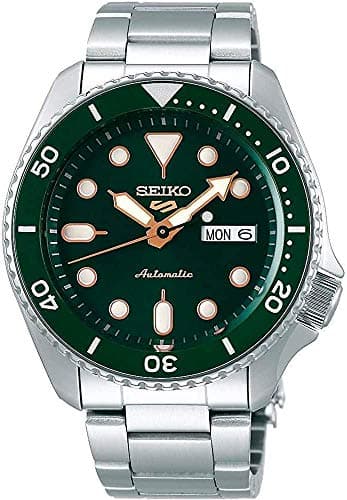 Seiko 5 Sports SRPD63 The 5KX in the configuration that is actually in stock: green sunray dial, 24-jewel 4R36, 100m, and a steel bracelet rather than a rubber strap — at Seiko's own $350 list. | The one Seiko 5 to own if you own one | 8.3 | $350.00Amazon |
| 05 | 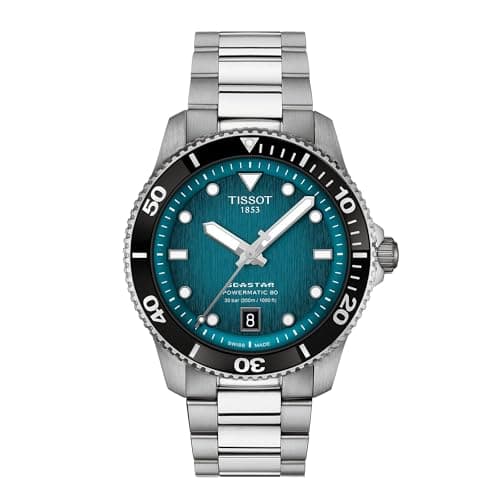 Tissot Seastar 1000 Powermatic 80 40mm The Swiss diver that makes sense: an 80-hour Powermatic 80, sapphire, a 300m screw-down case and a quick-release bracelet, in a 40mm case that fits normal wrists. | A genuine Swiss dive watch under $1,000 | 8.6 | $875.00Amazon |
#ad · Live prices from the Amazon Product API, as of October 16, 2026. Where we have no verified live price we show none — a gap beats a number that has rotted.
The comparison
Every pick, side by side
Published specifications from each maker's own product pages and the caliber references in Sources. Water-resistance ratings follow the ISO static-pressure definition, not a depth you can take the watch to.
| Watch | Published specs | Best for | Price |
|---|---|---|---|
| TissotTissot PRX Powermatic 80 | Powermatic 8080h reserve100m WRSapphire40mm | The 'if you can stretch past $500' upgrade | $850.00 |
| HamiltonHamilton Khaki Field Auto 38mm | H-10 · 80hSapphire100m WR38mmHacking | The definitive field watch, if the budget stretches | $795.00 |
| OrientOrient Mako 40 (AC0Q Diver) | F6722 · in-house200m WRSapphire39.9mmL2L 46.5mm | A 200m in-house diver on a normal wrist | $253.25 |
| SeikoSeiko 5 Sports SRPD63 | 4R36 · 24J100m WRHardlex42.5mm · L2L 46mm22mm lugs | The one Seiko 5 to own if you own one | $350.00 |
| TissotTissot Seastar 1000 Powermatic 80 40mm | Powermatic 8080h reserve300m WRSapphire AR40mm | A genuine Swiss dive watch under $1,000 | $875.00 |
#ad · we may earn a commission · Specs as published by the manufacturer (see Sources). Live prices from the Amazon Product API, as of October 16, 2026 — where we have no verified live price we show none rather than a number that has rotted.
The full breakdown
Every pick, in detail
#01 · Tissot
Tissot PRX Powermatic 80
The stretch pick that changes the game: a Swiss Powermatic 80 with an 80-HOUR power reserve, sapphire, and an integrated-bracelet case that reads like a luxury watch.
Best for
The 'if you can stretch past $500' upgrade
Who should skip it
You're strict about a $500 ceiling — the PRX sits above it. Under $500, the Seiko and Orient picks give you 90% of the wrist presence.
The case for
- 80-hour power reserve — leave it off all weekend and it's still running
- Sapphire crystal front and back, Nivachron antimagnetic hairspring
- Integrated bracelet design that punches far above its price
The catch
- Above the $500 line
- Integrated bracelet limits strap swaps
- Value
- 8.5
- Movement
- 9.0
- Build
- 9.0
- Legibility
- 8.0
- Fit
- 8.5
Price as of October 16, 2026. Prices change — Amazon's is the one that counts.
#ad · we may earn a commission from this link to Tissot PRX Powermatic 80
#02 · Hamilton
Hamilton Khaki Field Auto 38mm
The field-watch benchmark. Swiss H-10 movement with an 80-HOUR reserve, sapphire, and a 38mm case that's the correct size. Usually a stretch past $500 — and usually worth it.
Best for
The definitive field watch, if the budget stretches
Who should skip it
You're holding a hard $500 line — the Seiko SRPG or SNK give you the field look for a third of the price, minus the sapphire and the 80-hour movement.
The case for
- 80-hour power reserve, hacking, Nivachron hairspring
- Sapphire crystal and true Swiss build
- 38mm is the platonic field-watch size
The catch
- Sits above $500
- No lume monster — it's a tool, not a diver
- Value
- 8.0
- Movement
- 9.0
- Build
- 9.0
- Legibility
- 9.0
- Fit
- 9.0
Price as of October 16, 2026. Prices change — Amazon's is the one that counts.
#ad · we may earn a commission from this link to Hamilton Khaki Field Auto 38mm
#03 · Orient
Orient Mako 40 (AC0Q Diver)
Sapphire, 200m and the in-house F6722 in a 39.9mm case on 20mm lugs — the Orient diver that takes an ordinary strap and reads smaller than a Kamasu.
Best for
A 200m in-house diver on a normal wrist
Who should skip it
You want the day-date layout or a published accuracy spec — the Mako II and Kamasu use the F6922, which gives you both. And Orient does not call this a Mako, so shop the RA-AC0Q reference, not the name.
The case for
- 39.9mm on 20mm lugs — standard strap widths, unlike the Kamasu's 22mm
- Sapphire crystal and a screw-down crown as standard
- In-house F6722 hacks and hand-winds, ~40h reserve
The catch
- Date only — no day window, unlike the F6922 in the Mako II and Ray II
- Orient publishes no daily accuracy tolerance for this reference
- 12.8mm thick, so it is compact across the wrist rather than slim
- Value
- 9.0
- Movement
- 7.5
- Build
- 8.5
- Legibility
- 8.0
- Fit
- 8.5
Price as of October 16, 2026. Prices change — Amazon's is the one that counts.
#ad · we may earn a commission from this link to Orient Mako 40 (AC0Q Diver)
#04 · Seiko
Seiko 5 Sports SRPD63
The 5KX in the configuration that is actually in stock: green sunray dial, 24-jewel 4R36, 100m, and a steel bracelet rather than a rubber strap — at Seiko's own $350 list.
Best for
The one Seiko 5 to own if you own one
Who should skip it
Your wrist is under about 6.5 inches, or you want a slim watch — 42.5mm and 13.4mm is a sports case and it reads like one. The 37.4mm SRPK91 is the same movement in a far smaller one.
The case for
- 46mm lug-to-lug on a 42.5mm case — the shortest lug span in the Seiko 5 line
- 4R36 hacks and hand-winds, 24 jewels, approx. 41h reserve, day/date
- Ships on a stainless steel bracelet, not a strap, at the same $350 list
The catch
- Hardlex crystal, not sapphire
- 13.4mm thick — the thickest non-GMT Seiko 5
- Seiko publishes no daily accuracy figure on this product page
- Value
- 8.5
- Movement
- 8.0
- Build
- 8.5
- Legibility
- 8.5
- Fit
- 8.0
Price as of October 16, 2026. Prices change — Amazon's is the one that counts.
#ad · we may earn a commission from this link to Seiko 5 Sports SRPD63
#05 · Tissot
Tissot Seastar 1000 Powermatic 80 40mm
The Swiss diver that makes sense: an 80-hour Powermatic 80, sapphire, a 300m screw-down case and a quick-release bracelet, in a 40mm case that fits normal wrists.
Best for
A genuine Swiss dive watch under $1,000
Who should skip it
You are shopping under $500. The Orient Kamasu gives you sapphire and 200m for a fraction of this — the Seastar buys you Swiss finishing and the 80-hour movement, not a better dive rating you'll ever use.
The case for
- 300m water resistance with a screw-down crown and caseback
- 80-hour power reserve and a Nivachron antimagnetic balance spring
- Quick-release bracelet — strap swaps take seconds, no tools
The catch
- Costs several times a Seiko or Orient diver with the same job description
- Anti-reflective coating is on the underside of the crystal only
- Value
- 8.0
- Movement
- 9.0
- Build
- 9.0
- Legibility
- 8.5
- Fit
- 8.5
Price as of October 16, 2026. Prices change — Amazon's is the one that counts.
#ad · we may earn a commission from this link to Tissot Seastar 1000 Powermatic 80 40mm
The four specs a trip actually tests
1. Power reserve — the one that bites
Here is the scenario every mechanical-watch owner meets exactly once. You wear the watch to the airport, take it off at security, put it in the tray, put it in your bag because the flight is twelve hours, land, sleep, and pull it out thirty-six hours later: stopped. Now you are setting the time and the date in a hotel room with no idea what the date is locally.
A 40-hour movement cannot survive that. An 80-hourone can, with a day and a half to spare. Three of the five picks here carry 80 hours — the Tissot Powermatic 80 twice and Hamilton's H-10 once — and that is the single strongest reason to pay more for a travel watch. Power reserve explained covers how the figure is derived, and best automatics with an 80-hour reserve ranks everything on this site that clears it.
2. Water resistance — you will get in water you did not plan on
Hotel pools, hotel showers, the sea, a canoe, rain in a city you have no umbrella for. 100m is the floor for a travel watch, because under the ISO standard that is the first rating at which swimming is sensible, and a 30m dress watch is a watch you spend the trip taking off and leaving places. Two picks here go further: 200m on the Orient and 300m on the Tissot Seastar. Water resistance ratings explained sets out exactly what each rating permits — including why a hot shower is harder on gaskets than a swim.
3. Hacking — the time-zone change nobody mentions
Hacking means the second hand stops when you pull the crown, so you can set the watch to the exact second. On a trip you change time zones at least twice, and a watch that does not hack leaves you re-syncing to the nearest vague minute each time. All five picks here hack — the Seiko 4R36, Orient F6722, Hamilton H-10 and Tissot Powermatic 80 all do. Plenty of cheaper automatics do not; hacking and hand-winding explained lists which is which, and why you also want hand-winding on a travel watch (you can wake a stopped watch in thirty seconds instead of shaking it for five minutes).
4. Size — under a cuff, and comfortable asleep
A travel watch gets worn in a plane seat, slept in, and worn under a jacket. The useful numbers are the lug-to-lug span and the thickness, not the diameter. The Hamilton Khaki Field is 38mm and the smallest thing here; the Seiko 5 is 42.5mm with a published 46mm lug-to-lug, which is shorter than you would guess from the diameter. Watch size and fit is the method, and best 40mm automatic watches is the shortlist if 40mm is your number.
When you genuinely do want a GMT
Three situations, honestly:
- You need home time continuously, not occasionally — work calls, markets, family you message daily.
- You cross zones constantly rather than twice a year, so the mental arithmetic becomes a daily tax.
- You want the watch because a GMT hand is a lovely thing. That is a perfectly good reason and we are not going to argue with it.
If any of those is you, the affordable mechanical GMT field is narrow — essentially one Seiko caliber family — and it is covered properly in best GMT watches under $500. If none of them is you, a GMT is a complication you will use twice and pay for always, and one of the five picks above is the better buy.
Why the Tissot PRX wins
Because it is the only watch here that clears every one of the four tests at once: 80 hours of reserve so it survives being packed, 100m so the hotel pool is not a decision, a sapphire crystalso a trip's worth of knocks does not leave a mark, and a 40mm case on an integrated bracelet that reads as dressy enough for dinner and casual enough for a flight. The Powermatic 80 is the ETA C07.111, and it hacks and hand-winds.
The honest cons: Tissot publishes no daily accuracy specification for the Powermatic 80 at all, the integrated bracelet means you cannot fit a cheap strap from a hotel-lobby shop if a link breaks, and it is the most expensive watch on the page. Full detail in the Tissot PRX review, and the size question is settled in PRX 35 vs 40.
Two practical things before you fly
- Wind it fully the morning you leave. About 30 crown turns on a hand-windable automatic. A watch that starts the trip at half wind starts the trip already losing time, and amplitude is most of what accuracy is — automatic watch accuracy explains why.
- Do not change the date between about 8pm and 4am local, when the calendar mechanism is already engaged. This is the easiest way to damage an automatic in a hotel room, and it is the one rule in how to set an automatic watch worth memorizing. What can damage an automatic watch has the rest.
Airport security, for the record, is a non-issue: the walk-through arches and X-ray belts are not the kind of static magnetic field that magnetizes a hairspring. What does magnetize watches is the everyday stuff you travel with — laptop speakers, magnetic laptop sleeves, tablet covers, magnetic phone mounts. Keep the watch out of the same pocket as those.
Questions
FAQ
What is the best automatic watch for travel?
The Tissot PRX Powermatic 80. It is the only pick here that clears all four travel tests at once: an 80-hour power reserve so it is still running after two days in a bag, 100m of water resistance for pools and rain, a sapphire crystal, and a 40mm case that works with a jacket and in a plane seat. On a tighter budget the Orient Mako 40 gives you sapphire and 200m for far less, with a roughly 40-hour reserve as the trade.
Do I need a GMT watch for travel?
Probably not. A GMT is worth it if you need to track home time continuously — daily calls, markets, family across several hours — or if you cross zones constantly. For a holiday you change the hour hand on arrival and you are finished. The specifications that actually decide whether a mechanical watch is pleasant to travel with are power reserve, water resistance and whether it hacks.
Will airport security or an X-ray machine damage an automatic watch?
No. Walk-through arches and X-ray belts are not the kind of sustained static magnetic field that magnetizes a hairspring, and X-rays do nothing to a mechanical movement. The things that genuinely magnetize watches are the items you travel with: laptop speakers, magnetic laptop sleeves and tablet covers, magnetic phone mounts and magnetic bag clasps.
How long will an automatic watch run in my suitcase?
Exactly as long as its published power reserve, from the moment it stops moving. Roughly 40 hours for a Seiko 4R36 or an Orient F6722, and 80 hours for a Hamilton H-10 or a Tissot Powermatic 80. That is the whole argument for the 80-hour movements on this page: a watch packed on Friday evening is still running Monday morning, so you never reset it in a hotel room.
Should I take my watch off on a plane?
There is no mechanical reason to. Cabin pressure changes are trivial next to any water-resistance rating, and a watch on your wrist keeps winding. The practical reason people do take it off is comfort while sleeping — and if you do, the reserve is what decides whether it is still running when you land. Wind it fully before you leave.
Specs & sources
Specifications on this page are compiled from manufacturer datasheets, official product pages, and published standards. Prices are pulled live from Amazon and date-stamped; nothing is invented.
- Tissot PRX Powermatic 80 (official) ↗
- ETA C07.111 / Tissot Powermatic 80 caliber reference (3Hz / 21,600 vph, 80-hour reserve, based on the ETA 2824-2, synthetic escapement, index regulator) ↗
- Hamilton Khaki Field Auto (official) ↗
- Orient AC0Q Diver 40mm, RA-AC0Q09R30B (official) ↗
- Orient caliber F6722 reference (in-house, 22 jewels, 21,600 bph, hacks + hand-winds, date only) ↗
- Seiko 5 Sports SRPD63 published specifications (4R36, 24 jewels, 42.5mm, 13.4mm, 46mm lug-to-lug, 22mm lugs, 100m, Hardlex, approx. 41h, $350) ↗
- Seiko caliber 4R36 reference ↗
- Seiko official instruction manual, calibers 4R35 / 4R36 / 4R37 / 4R38 / 4R39 / 4R71 / 4R72 - specifications ↗
- Tissot Seastar 1000 Powermatic 80 40mm (official) ↗
- ISO 22810 / water-resistance meaning ↗
Keep reading