Buying guide
Best Automatic Watches For Work
Whether 'work' means a jobsite or a desk, the spec that decides it is the crystal - and the honest answer involves one watch on this page that is not an automatic at all.
The pick is the Orient Mako 40 — a sapphire crystal and 200m of water resistance in a 39.9mm case, which is the only combination on this site that gets both halves of the working-day problem right. It is for anyone who wants one mechanical watch that goes from a workshop to an office without being babied. If your work is genuinely rough — trades, plant, anything with impact or vibration all day — scroll to the bottom pick and read why we would put a $70 quartz Casio on your wrist instead, and we will not pretend otherwise to sell you a mechanical watch.
The specification that decides a work watch is the crystal, and almost nobody frames it correctly. Sapphire is roughly nine times harder than mineral glass and will not scratch against steel, concrete dust or a doorframe; it is also more brittle, so a sharp point impact is likelier to chip or shatter it. Mineral and Seiko's Hardlex do the opposite — they absorb an impact and keep every scratch forever. Neither is "better". Which one you want depends on whether your working day is full of abrasion or full of knocks, and that is the actual question this page answers.
Everything below is ranked on published manufacturer specifications — crystal material, water-resistance rating, case size, lug width and movement — with live prices from the Amazon Product Advertising API and a date stamp on every one. We have not worn these on a jobsite; our method, and what we do not claim, is in how we pick.
Disclosure
Some links here are affiliate links — mostly to Amazon. If you buy through one we may earn a small commission, at no extra cost to you. It never changes which watch we pick or the price you pay. Prices are pulled live and date-stamped; where we can't verify one, we show none. Full disclosure.
The short answer
Quick picks
| # | Product | Best for | Score | Price |
|---|---|---|---|---|
| 01 | 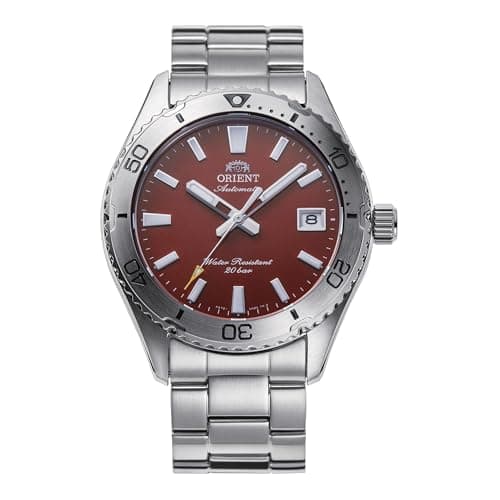 Orient Mako 40 (AC0Q Diver) Sapphire, 200m and the in-house F6722 in a 39.9mm case on 20mm lugs — the Orient diver that takes an ordinary strap and reads smaller than a Kamasu. | A 200m in-house diver on a normal wrist | 8.3 | $253.25Amazon |
| 02 | 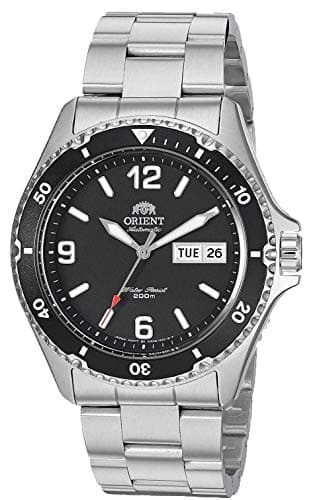 Orient Mako II The Kamasu's cheaper sibling: same in-house F6922 and 200m case, but mineral crystal instead of sapphire. A dive-watch bargain if you don't need the sapphire. | A 200m in-house diver at the lowest honest price | 8.1 | $230.00Amazon |
| 03 | 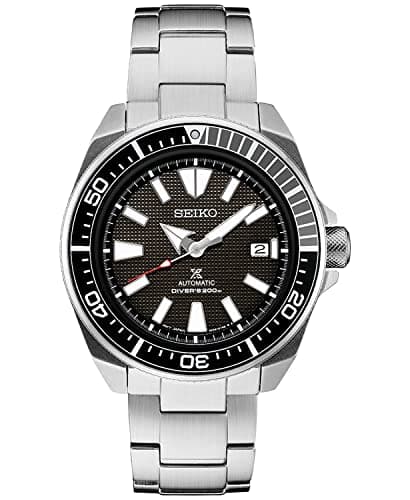 Seiko Prospex SRPF03 A 44mm Prospex diver with the 4R35, a 200m scuba-rated case and a one-way bezel. The one to buy when the Turtle's cushion case is the wrong shape but you still want a big, serious diver. | Larger wrists that want a real 200m Seiko diver | 7.9 | $440.00Amazon |
| 04 | 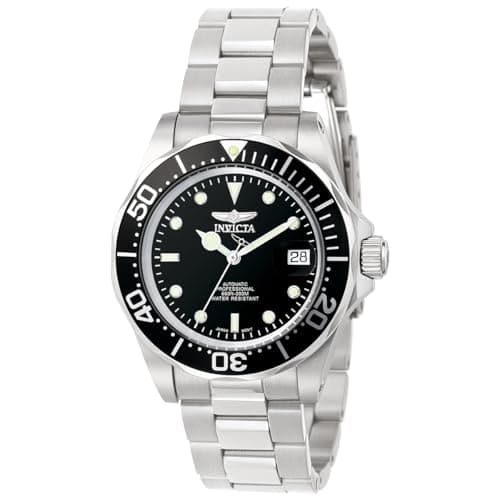 Invicta Pro Diver 8926OB The cheapest automatic diver worth owning. A Miyota 8215, 200m case and a Submariner-style look for often under $100 — the punchline that's actually good. | The absolute-lowest-price automatic diver | 7.7 | $91.22Amazon |
| 05 | 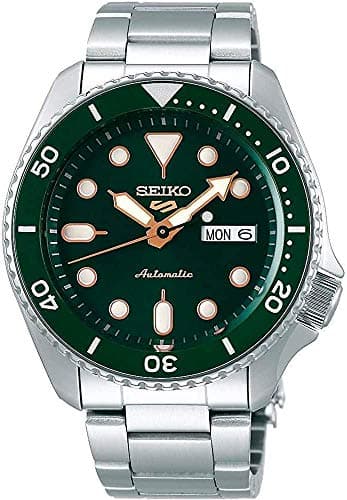 Seiko 5 Sports SRPD63 The 5KX in the configuration that is actually in stock: green sunray dial, 24-jewel 4R36, 100m, and a steel bracelet rather than a rubber strap — at Seiko's own $350 list. | The one Seiko 5 to own if you own one | 8.3 | $350.00Amazon |
| 06 | 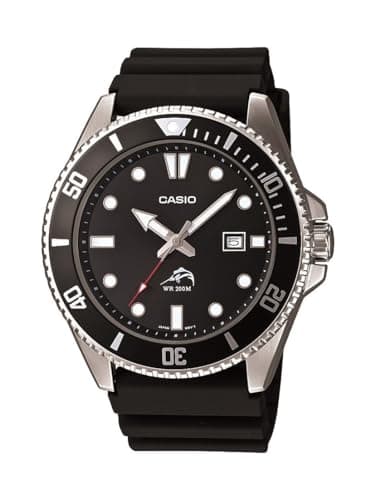 Casio Duro MDV106 Not automatic — QUARTZ — but the honest value benchmark every automatic under $150 has to beat. 200m, screw-down crown, often under $60. | When you don't actually need automatic | 7.9 | $68.99Amazon |
#ad · Live prices from the Amazon Product API, as of October 16, 2026. Where we have no verified live price we show none — a gap beats a number that has rotted.
The comparison
Every pick, side by side
Published specifications from each maker's own product pages and the caliber references in Sources. Water-resistance ratings follow the ISO static-pressure definition, not a depth you can take the watch to.
| Watch | Published specs | Best for | Price |
|---|---|---|---|
| OrientOrient Mako 40 (AC0Q Diver) | F6722 · in-house200m WRSapphire39.9mmL2L 46.5mm | A 200m in-house diver on a normal wrist | $253.25 |
| OrientOrient Mako II | F6922 · in-house-15/+25 sec/day200m WRMineral41.5mm | A 200m in-house diver at the lowest honest price | $230.00 |
| SeikoSeiko Prospex SRPF03 | 4R35 · 23J41h reserve200m WRHardlex44mm · 22mm lugs | Larger wrists that want a real 200m Seiko diver | $440.00 |
| InvictaInvicta Pro Diver 8926OB | Miyota 8215 · 21J-20/+40 sec/day200m WRMineral40mm | The absolute-lowest-price automatic diver | $91.22 |
| SeikoSeiko 5 Sports SRPD63 | 4R36 · 24J100m WRHardlex42.5mm · L2L 46mm22mm lugs | The one Seiko 5 to own if you own one | $350.00 |
| CasioCasio Duro MDV106 | Quartz±15 sec/MONTH200m WRMineral44mm | When you don't actually need automatic | $68.99 |
#ad · we may earn a commission · Specs as published by the manufacturer (see Sources). Live prices from the Amazon Product API, as of October 16, 2026 — where we have no verified live price we show none rather than a number that has rotted.
The full breakdown
Every pick, in detail
#01 · Orient
Orient Mako 40 (AC0Q Diver)
Sapphire, 200m and the in-house F6722 in a 39.9mm case on 20mm lugs — the Orient diver that takes an ordinary strap and reads smaller than a Kamasu.
Best for
A 200m in-house diver on a normal wrist
Who should skip it
You want the day-date layout or a published accuracy spec — the Mako II and Kamasu use the F6922, which gives you both. And Orient does not call this a Mako, so shop the RA-AC0Q reference, not the name.
The case for
- 39.9mm on 20mm lugs — standard strap widths, unlike the Kamasu's 22mm
- Sapphire crystal and a screw-down crown as standard
- In-house F6722 hacks and hand-winds, ~40h reserve
The catch
- Date only — no day window, unlike the F6922 in the Mako II and Ray II
- Orient publishes no daily accuracy tolerance for this reference
- 12.8mm thick, so it is compact across the wrist rather than slim
- Value
- 9.0
- Movement
- 7.5
- Build
- 8.5
- Legibility
- 8.0
- Fit
- 8.5
Price as of October 16, 2026. Prices change — Amazon's is the one that counts.
#ad · we may earn a commission from this link to Orient Mako 40 (AC0Q Diver)
#02 · Orient
Orient Mako II
The Kamasu's cheaper sibling: same in-house F6922 and 200m case, but mineral crystal instead of sapphire. A dive-watch bargain if you don't need the sapphire.
Best for
A 200m in-house diver at the lowest honest price
Who should skip it
You'll be annoyed by a scratch on the crystal — spend a little more on the Kamasu's sapphire.
The case for
- In-house F6922 — hacks and hand-winds
- 200m water resistance
- Usually the cheapest way into an Orient diver
The catch
- Mineral crystal (the Kamasu's sapphire is worth the small step up)
- Basic clasp
- Value
- 9.0
- Movement
- 8.0
- Build
- 7.5
- Legibility
- 8.0
- Fit
- 8.0
Price as of October 16, 2026. Prices change — Amazon's is the one that counts.
#ad · we may earn a commission from this link to Orient Mako II
#03 · Seiko
Seiko Prospex SRPF03
A 44mm Prospex diver with the 4R35, a 200m scuba-rated case and a one-way bezel. The one to buy when the Turtle's cushion case is the wrong shape but you still want a big, serious diver.
Best for
Larger wrists that want a real 200m Seiko diver
Who should skip it
Your wrist is under about 7 inches. This is one of the largest watches we list, and the 42.5mm Seiko 5 Sports covers the same ground in a case most people can wear.
The case for
- 200m, stated by Seiko as suitable for scuba diving, with a screw-down crown and caseback
- 4R35 hacks and hand-winds, ~41-hour reserve
- 44mm angular case and 22mm lugs — proper wrist presence and easy strap swaps
The catch
- Hardlex crystal, not sapphire
- 44mm and 13.4mm thick — no small wrist is wearing this
- Value
- 8.0
- Movement
- 8.0
- Build
- 8.5
- Legibility
- 9.0
- Fit
- 6.0
$550.0020% off
Price as of October 16, 2026. Prices change — Amazon's is the one that counts.
#ad · we may earn a commission from this link to Seiko Prospex SRPF03
#04 · Invicta
Invicta Pro Diver 8926OB
The cheapest automatic diver worth owning. A Miyota 8215, 200m case and a Submariner-style look for often under $100 — the punchline that's actually good.
Best for
The absolute-lowest-price automatic diver
Who should skip it
The homage styling bothers you, or you want a movement that hacks — the Orient Mako is the honest step up.
The case for
- 200m WR and a screw-down crown for around $100
- Miyota 8215 hand-winds (no hacking)
- 40mm — an easy, wearable size
The catch
- Unapologetic Rolex Submariner homage
- 8215 doesn't hack; QC can be uneven
- Value
- 9.0
- Movement
- 6.5
- Build
- 6.5
- Legibility
- 8.0
- Fit
- 8.5
Price as of October 16, 2026. Prices change — Amazon's is the one that counts.
#ad · we may earn a commission from this link to Invicta Pro Diver 8926OB
#05 · Seiko
Seiko 5 Sports SRPD63
The 5KX in the configuration that is actually in stock: green sunray dial, 24-jewel 4R36, 100m, and a steel bracelet rather than a rubber strap — at Seiko's own $350 list.
Best for
The one Seiko 5 to own if you own one
Who should skip it
Your wrist is under about 6.5 inches, or you want a slim watch — 42.5mm and 13.4mm is a sports case and it reads like one. The 37.4mm SRPK91 is the same movement in a far smaller one.
The case for
- 46mm lug-to-lug on a 42.5mm case — the shortest lug span in the Seiko 5 line
- 4R36 hacks and hand-winds, 24 jewels, approx. 41h reserve, day/date
- Ships on a stainless steel bracelet, not a strap, at the same $350 list
The catch
- Hardlex crystal, not sapphire
- 13.4mm thick — the thickest non-GMT Seiko 5
- Seiko publishes no daily accuracy figure on this product page
- Value
- 8.5
- Movement
- 8.0
- Build
- 8.5
- Legibility
- 8.5
- Fit
- 8.0
Price as of October 16, 2026. Prices change — Amazon's is the one that counts.
#ad · we may earn a commission from this link to Seiko 5 Sports SRPD63
#06 · Casio
Casio Duro MDV106
Not automatic — QUARTZ — but the honest value benchmark every automatic under $150 has to beat. 200m, screw-down crown, often under $60.
Best for
When you don't actually need automatic
Who should skip it
You specifically want a mechanical, self-winding movement and the feel that comes with it — that's the whole reason this site exists. But know what you're paying extra for.
The case for
- 200m WR for around $50 — unbeatable value
- Quartz accuracy: seconds per MONTH, not per day
- Set it and forget it — no winding, no daily drift
The catch
- Quartz, so no sweeping seconds or mechanical charm
- Resin strap most people swap
- Value
- 9.5
- Movement
- 7.0
- Build
- 7.0
- Legibility
- 8.5
- Fit
- 7.5
$84.9519% off
Price as of October 16, 2026. Prices change — Amazon's is the one that counts.
#ad · we may earn a commission from this link to Casio Duro MDV106
What actually matters in a work watch (and what does not)
1. The crystal — abrasion or impact, pick one
Covered above, and it is genuinely the first filter. If your day involves concrete, steel, sanding, bricks or crawling through anything, you want sapphire, because abrasion is constant and impacts are occasional. If your day involves dropping tools, swinging a hammer or working inside machinery, you want mineral or Hardlex, because a shattered sapphire is a dead watch and a scratched mineral crystal is an ugly watch. Sapphire vs mineral vs Hardlex has the hardness figures and the full argument.
2. Water resistance — as a seal rating, not a swimming depth
On a work watch the water-resistance rating is useful for a reason that has nothing to do with water: it is the only published proxy for how well the case is sealed against sweat, dust, sawdust and jetwash. A 30m dress watch has gaskets intended for rain. A 200m watch has gaskets, a thicker caseback and usually a screw-down crown intended for pressure. Under the ISO standard, 100m is the first rating at which swimming is sensible and 200m is the first that contemplates actual diving — water resistance ratings explained lists what each one actually permits. For work, read it as a dust-and-sweat rating and take the highest number you can afford.
3. Lug width — because the strap is the part that dies first
On any watch worn through real working days the strap or bracelet fails long before the movement does. A published, standard lug width means a $15 replacement; an integrated bracelet or an unpublished width means a problem. Two picks here publish 22mm, which is the most common size in existence — how to change a watch strap covers the five-minute swap, and a cheap nylon strap is also the single best anti-theft measure on a jobsite because nothing on your wrist looks expensive.
4. The cost of losing it
This is the specification nobody lists and everyone should. A watch worn at work gets scratched, soaked, dropped and occasionally stolen out of a van. The correct amount to spend is the amount you can lose without it ruining your month, which for most people on this page means the $100 to $250 band rather than the $500 one. That is why the cheapest watch here is a serious recommendation and not a filler pick.
5. What does NOT matter
- Power reserve. A work watch is on your wrist every day by definition, so it never runs down. Eighty hours is worth nothing here. (It is worth a lot on a rotation — see power reserve explained.)
- Published daily accuracy. It matters, but not for this use case. Nobody is timing a concrete pour to the second.
- An exhibition caseback. A sapphire window on the back of a watch pressed against a workbench is a liability, not a feature.
The honest caveat: automatics and all-day vibration
A mechanical watch is a balance wheel oscillating on two tiny pivots. It handles the knocks of ordinary life fine — that is what shock protection is for. What no maker publishes a specification for is sustained, high-frequency vibration: a jackhammer, an impact wrench, a demolition saw, a grinder held for hours. There is no number on any datasheet that tells you how a hairspring behaves after a thousand hours of that, and anyone who gives you one is guessing.
So here is the honest position. If your job involves that kind of tool every day, buy a quartz watch — which is why the Casio Duro MDV106 is on this page. It is 200m rated, costs less than a tank of fuel, keeps time to about ±15 seconds a month rather than per day, and has no balance wheel to upset. If your work is a warehouse, a kitchen, a ward, a workshop, a yard or a desk, the automatics above are genuinely fine and far nicer to own.
Why the Orient Mako 40 wins
It is the only watch in the registry that combines a sapphire crystal, 200m of water resistance, an in-house caliberand a case under 40mm. The F6722 is Orient's own movement, hacks and hand-winds, and Orient's specification sheets give the F6 family -15 / +25 seconds a day, the tightest published accuracy window of any maker on this page. At 39.9mm across and a published 46.5mm lug-to-lug it also fits under a cuff, which a 44mm diver does not.
The honest cons: the bracelet is the weakest part of the watch, Orient publishes no thickness figure, and the sapphire means a hard point-impact is a real risk. Full write-up in the Orient Mako 40 review.
If your work is mostly indoors and mostly a desk
Then this is the wrong page and best everyday automatic watches is the right one — it ranks the same category on comfort and day-to-day usability rather than abrasion resistance. If the watch needs to look right with a jacket, go to best affordable dress watches instead. And if you want the military-derived look without a dive bezel, best field watches under $500 is the shortlist — field watches were designed for exactly this problem eighty years ago.
One thing to do on day one
Size the bracelet properly and keep the removed links in the box. A bracelet that slides around does two bad things on a work watch: it lets the case bang into everything from a running start, and on an automatic it reduces how consistently the rotor winds, because the watch is moving independently of your arm instead of with it. How to resize a watch bracelet is the ten-minute job, and how tight should a watch be is the target.
Questions
FAQ
What is the best automatic watch for work?
The Orient Mako 40, because it is the only watch here pairing a sapphire crystal with 200m of water resistance in a sub-40mm case — the abrasion resistance that work actually demands plus a case sealed well enough for sweat, dust and jetwash. If your job involves all-day impact tools, buy the quartz Casio Duro instead; no maker publishes a vibration specification for a mechanical movement.
Can you wear an automatic watch on a construction site?
For most trades, yes — with two provisos. Take a watch with 100m or better water resistance (read as a dust-and-sweat seal rating) and think hard about the crystal: sapphire resists the constant abrasion of concrete and steel, mineral and Hardlex survive knocks better. The genuine exception is sustained vibration from impact tools, for which no manufacturer publishes any tolerance at all. If that is your whole day, wear quartz.
Is sapphire or mineral glass better for a work watch?
Neither, universally — they fail differently. Sapphire is far harder and will not scratch against concrete, steel or grit, but it is more brittle and a sharp point impact can chip or shatter it. Mineral glass and Seiko's Hardlex absorb impacts better and keep every scratch permanently. Abrasive work wants sapphire; impact-heavy work wants mineral.
How much should I spend on a watch I wear to work?
As much as you can afford to lose. A watch worn through real working days gets scratched, soaked, dropped and occasionally stolen, and none of that is recoverable. For most people that puts the right figure in the $100 to $250 band, which is exactly where the best-value picks on this page sit. Spending $800 on a work watch buys you anxiety, not durability.
Do I need a 200m dive watch if I never dive?
Not for the water, but the rating is still the most useful durability proxy a maker publishes. A 200m case has thicker gaskets, a more substantial caseback and usually a screw-down crown, which is what keeps sweat, dust and pressure-washer spray out. Read the number as a seal specification rather than a depth and take the highest one your budget allows.
Specs & sources
Specifications on this page are compiled from manufacturer datasheets, official product pages, and published standards. Prices are pulled live from Amazon and date-stamped; nothing is invented.
- Orient AC0Q Diver 40mm, RA-AC0Q09R30B (official) ↗
- Orient caliber F6722 reference (in-house, 22 jewels, 21,600 bph, hacks + hand-winds, date only) ↗
- Orient caliber F6922 reference ↗
- Orient Kamasu RA-AA0003R39B, official specifications (41.88mm, 47mm lug to lug, 12.8mm) ↗
- Orient movements explained (F6922/F6724) ↗
- Seiko Prospex SRPF03 (official) ↗
- Seiko caliber 4R35 reference ↗
- Seiko caliber 4R36 reference ↗
- Seiko 5 Sports SRPD63 published specifications (4R36, 24 jewels, 42.5mm, 13.4mm, 46mm lug-to-lug, 22mm lugs, 100m, Hardlex, approx. 41h, $350) ↗
- Miyota 8215 (official) ↗
- Casio MDV-106-1AV (official) ↗
- ISO 22810 / water-resistance meaning ↗
Keep reading